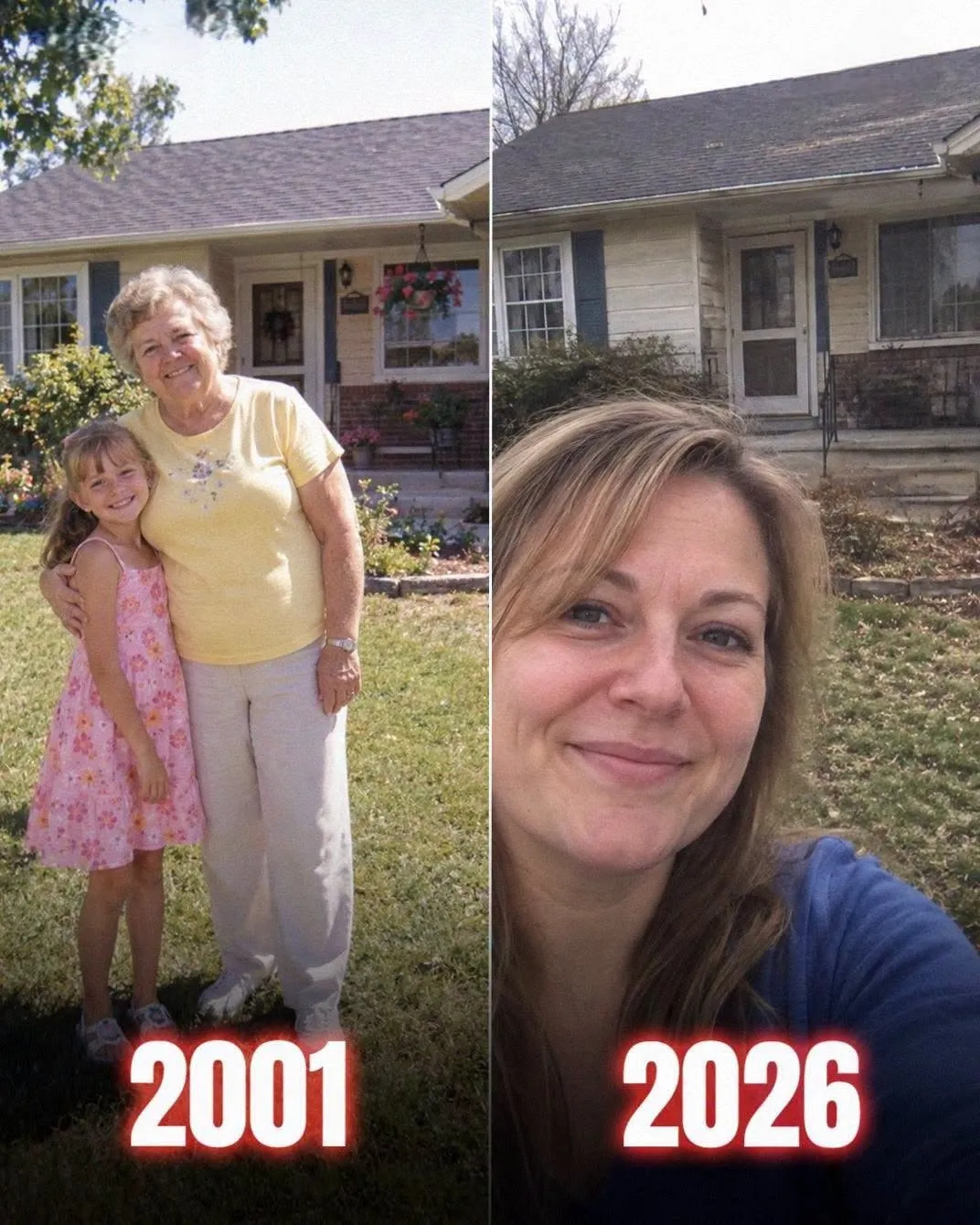
Giving my grandmother back the house she’d lost was supposed to be a happy surprise. Instead, her reaction made me wonder what had been left behind all those years ago.
The first thing my grandmother asked after I told her I’d bought back her old house wasn’t whether the porch was still there. After almost a full minute of silence, she didn’t ask about the apple tree Grandpa had planted.
My grandma didn’t even ask whether the living room still had the fireplace. She asked about the basement.
She didn’t ask about the apple tree.
“Honey… I never expected to hear this. Tell me, you didn’t open the basement door, did you?”
I stood on the front porch, my phone pressed to my ear. Behind me was the house I’d spent years hoping I could one day give back to her.
I’d expected tears, maybe laughter. Maybe one of Grandma Evelyn’s speeches about not spending money on her.
Instead, I got a question about the basement.
“Grandma, no, I didn’t open it. Why are you asking about the basement? Aren’t you happy that you’re getting your house back?”
There was a pause. Then she answered too quickly.
“Yes, yes, sweetheart, of course I’m happy. I’ll get ready and come over right now. There’s probably a terrible smell down there.”
I looked toward the side of the house.
Then she answered too quickly.
“Why would there be a terrible smell?”
“It’s an old basement.”
“That doesn’t answer my question.”
“It answers enough. But please don’t touch anything until I get there. And don’t open that basement.”
“You’re two or three hours away, and you want me to just sit here doing nothing?”
“Okay, Grandma. Don’t worry. I’ll wait for you,” I replied reluctantly.
“It’s an old basement.”
When I was eight, Grandma Evelyn took me in after my parents died in a car crash. We lived in her small house on the outskirts of town. I remember very little about the weeks after that.
I remember that Grandma never gave long speeches. She just kept showing up for breakfast, school, homework, dinner, and bedtime.
Then she did it again the following day.
I remember very little.
She and my grandfather, Frank, had spent most of their married life in that house.
Grandpa had been sick with cancer for a long time. After he was gone, Grandma was left with bills connected to his care and a mortgage she couldn’t keep up with.
She had a small pension and took jobs wherever she could. My grandmother hemmed pants, helped at the church office, and cleaned houses twice a week.
Grandpa had been sick.
For a while, Grandma baked pies for a diner until she declared that 12 pies before sunrise were “a plan invented by people who hated sleep.”
Still, it wasn’t enough.
Eventually, she fell too far behind on the mortgage. The bank took the house.
I still remembered packing. Grandma folded dish towels before putting them into boxes even though she was crying so much she had to keep wiping her eyes.
We moved into a tiny rental apartment.
The bathroom door wouldn’t close unless you lifted it. My bed was beside a radiator that made strange noises all winter.
We counted every dollar, barely making ends meet. But Grandma never once made me feel as if I didn’t have a home.
I grew up, went to college, and worked as hard as I possibly could so my grandmother could have a better life.
I loved her so much for everything she’d done for me.
We counted every dollar.
When I could afford it, I moved Grandma into a better, nicer apartment.
“You’re wasting money on an old woman.”
“You’re 68. That’s not old.”
“Depends who you ask.”
But one thing kept bothering me: her old house.
I checked estate listings and auctions for years.
Then one evening, there it was: the same address, porch, and upstairs windows.
The house had changed owners more than once, and someone had updated the kitchen and floors.
But it was still her old house.
I bought it but didn’t tell her.
I wanted the surprise to be perfect.
The house had changed owners.
The day the paperwork was done, I drove to the old house alone.
I stood there, staring. I couldn’t believe my eyes! Then I called her excitedly.
After 25 years away from the home she’d cried over losing, her first question had been about the basement.
That question followed me as I tried to sit on the porch.
I couldn’t believe my eyes!
Why had her first question been about the basement? It was supposed to be empty. It almost seemed as if she hadn’t even been happy about the news.
I lasted 11 minutes.
Then I went inside.
I walked through the living room, then stood beside the basement door.
It still had an old, rusty lock.
That should’ve been another clue.
It was supposed to be empty.
I found some old tools the previous owner had left behind.
It took some effort, but eventually, I got the lock open.
Then the horrible smell hit me. I stepped backward.
I found some old tools.
Whatever had been sealed down there had apparently spent those years preparing itself for my arrival.
I covered my nose with my sleeve, turned on my phone’s flashlight, and started down.
Initially, the basement looked empty.
Nothing that explained the smell.
I covered my nose.
Then I noticed a section of old paneling near the back wall. Something round was sticking through a gap.
I dropped to my knees in shock and screamed,
“Oh my God… What had she been hiding all these years?!”
It looked like cloth. I pulled. Nothing moved. I pulled harder.
Part of the panel shifted.
The smell got worse!
I dropped to my knees.
I covered my nose with more clothing and aimed the flashlight through the opening.
A storage room behind the panel, with shelves covering three walls. I could see round objects wrapped in cloth and wax. Dozens of them. Maybe more.
For a few seconds, I didn’t know what I was seeing.
Then I noticed labels.
I could see round objects.
“GARLIC – POSSIBLY TOO MUCH.”
“HERB – TRY AGAIN.”
“BATCH 14 – THIS ONE IS GOOD.”
My grandmother had hidden a room!
Some of the wrapping had failed, and some wax had cracked.
Dark stains ran down the shelves. A few shelves had sagged.
That explained the smell.
Then I saw another label.
“BATCH 19 – FRANK REFUSES TO TRY IT.”
Underneath, in different handwriting:
“FRANK HAS COMMON SENSE.”
I sat back and started laughing.
That explained the smell.
Grandpa. That had to be him!
“NOTHING ABOUT THIS HOUSE IS A FARM.”
“OR UNTIL EVELYN ADMITS DEFEAT.”
I was still laughing when I heard a car pull into the driveway.
That had to be him!
I checked the time. She’d gotten there faster than I expected.
And I was exactly where she’d told me not to be.
Her voice came from upstairs.
A few seconds later, I saw her shoes on the stairs.
I checked the time.
Grandma came down slowly. When she reached the bottom and saw the opened panel, she stopped. Her purse slipped down her arm.
“I specifically told you not to.”
“You made it sound suspicious!” I pointed behind me. “You had a cheese room!”
My grandmother closed her eyes.
Then she opened them and stared at the shelves.
“Grandma, one of those things may have filed taxes by now.”
“Some aged cheeses keep for years.”
“Does this look proper?”
She didn’t respond, but put her purse on an empty chair.
I picked up one label.
“Would you like to explain Batch 19?”
“Grandpa refused to eat it.”
“He wrote that he had common sense.”
“He was also rude.”
“Does this look proper?”
I grabbed another label.
“SMOKED ATTEMPT – DO NOT REPEAT.”
“That one went badly.”
“I tried making cheese professionally.”
She folded her hands.
My grandma narrowed her eyes.
“A little,” I said, laughing.
“Wait until somebody finds your mistakes behind a wall!”
“I don’t have a basement.”
Then she finally told me everything.
Years before Grandpa became sick, Grandma Evelyn took a weekend class at a farm.
They taught bread-making, preserving, and simple cheese-making.
She loved the cheese part too much.
“I made one at home,” she said.
She frowned and told me that Grandpa had apparently praised it.
That was his first mistake.
Grandma decided she could sell homemade cheese at local farmers’ markets. Grandpa pointed out that she had made exactly one. My grandmother interpreted that as a lack of faith.
“So you made more?”
I gestured toward the room.
“This is your definition of a few?”
That was his first mistake.
At first, she used the kitchen, then the refrigerator, and then the pantry shelves.
Eventually, Grandpa Frank told her the house had become “overrun.” So they cleared part of the basement. It stayed cool down there.
Then Grandma decided she needed a separate aging area.
That’s when the panel wall went up.
“It kept the temperature steadier,” she said.
“And hid this from visitors.”
Then came the experiments: garlic, herbs, pepper, smoked cheese, different aging times, and shapes.
Grandpa became the official tester until he resigned.
Then came the experiments.
“He wrote it down.”
“It might still be here.”
I started looking and eventually found a folded paper under an old tin.
Written in Grandpa’s block letters: “NOTICE OF RETIREMENT.”
“After tasting 31 experimental cheeses, I, Frank, hereby retire from all future cheese duties.”
I laughed so hard I had to lean against the wall!
Grandma snatched the paper.
“He thought he was funny. Your grandpa encouraged me at first.”
“And apparently regretted it.”
She tried not to smile.
Then she told me about the market.
She prepared 40 wheels for her first big weekend.
Grandma snatched the paper.
She made labels, bought paper bags, and even created a sign: “EVELYN’S CELLAR CHEESE.”
“Seven if you count Frank.”
“You made Grandpa buy one?”
“He wanted to support me.”
“What did he do with it?”
I started laughing again.
Her business lasted three markets. Eventually, Grandma Evelyn accepted that the town didn’t need as much homemade cheese as she believed. But she hated wasting anything.
So she kept aging batches because she thought some would improve.
Grandpa kept adding his own labels.
“EVELYN SAYS GIVE THIS ANOTHER YEAR. I SAY GIVE IT TO SOMEBODY WE DON’T LIKE!”
Grandma reached for it.
I held it away.
“This one stays. It should be framed!”
Then her face changed. She looked across the shelves.
“When Frank became sick, I stopped coming down here.”
I held it away.
Her days became appointments, bills, and caretaking.
The cheese room stopped mattering.
After Grandpa was gone, her money problems got worse.
By the time she learned she’d have to leave the house, she had very little time.
Neighbors helped her pack upstairs.
Nobody knew about the hidden room.
And Grandma wasn’t about to explain it.
Her money problems got worse.
“So you left everything?”
“I thought whoever bought the house would eventually tear the wall out.”
“No, it seems not. I’d hoped I was wrong about the cheeses still being here when I asked you not to come down.”
“You weren’t worried about the basement. You were embarrassed.”
“So you left everything?”
“I spent almost three decades hoping nobody would learn I once tried to become the cheese queen of the county.”
“Don’t ever repeat that.”
“Grandma Evelyn, Cheese Queen!”
“You just got the house back!”
She pointed at me.
“Don’t ever repeat that.”
We spent the afternoon opening windows and figuring out what needed to go.
Nothing would be eaten. That was my rule.
Grandma objected exactly once. She picked up a small wax-covered wheel and read the label.
“AGED CHEDDAR – KEEP.”
“This one might be interesting.”
I took it from her.
That was my rule.
“You haven’t even looked.”
“It was made when I was in elementary school.”
“Age isn’t always bad.”
“That argument won’t save this cheese.”
She watched me put it aside.
“You’re being controlling in my house.”
“Age isn’t always bad.”
“Technically, I bought it.”
Grandma stared at me.
I lasted three seconds.
Near the bottom shelf, I found a wooden sign.
I wiped off the dust.
I lasted three seconds.
Grandma Evelyn took it.
For once, she didn’t joke. She ran her thumb over Grandpa’s handwriting.
“Your grandfather hated this room.”
“He complained about it.”
“But he built the shelves.”
“He liked building things.”
“He tasted 31 cheeses, Grandma.”
“His resignation said 31.”
“The last one shouldn’t count.”
“He spit it out.”
Then she held the sign against her chest.
“He spit it out.”
“Your grandpa would’ve loved this.”
“You buying the house back.”
I looked around the basement at Grandpa’s notes, Grandma’s failed business, and years of embarrassment, still sitting on shelves.
I hadn’t bought back a perfect house. I’d bought the memorable and nostalgic parts too.
And that made it feel more like home.
I looked around the basement.
Weeks later, Grandma moved back in.
We didn’t recreate the cheese cellar.
I cleaned Grandpa’s little sign and hung it in the kitchen.
Grandma Evelyn complained about it for two days, then she stopped.
I framed his retirement notice, too.
She pretended to be offended.
One morning, I caught Grandma standing in front of Grandpa’s resignation note, smiling.
The basement was cleaned out and aired until the smell finally faded. It became storage for holiday decorations, boxes, and things that didn’t need aging.
A month later, I came over for dinner. Grandma had crackers on a plate.
Beside them were slices of cheese.
“Show me the package.”
“You have trust issues.”
“You gave them to me.”
She pulled the wrapper from the trash.
Grandma shook her head.
She handed me a cracker. I took a bite.
Grandma looked toward the framed basement sign.
I took a bite.
“I haven’t said anything!”
“You have the cheese face.”
“What does that mean?!”
“It means no new business.”
She laughed, then looked around the home she once believed she’d never see again.
Her house was finally hers.
“I haven’t said anything!”
“I suppose some ideas should stay in the past,” she said.
She raised her cracker.
“To knowing when to quit.”
I tapped mine against hers.
“And knowing what belongs in the basement.”
Years earlier, she’d walked away thinking she’d lost everything. But she hadn’t.
Some things simply waited for us to come home and find them.
Even if a few should’ve been thrown away decades earlier.