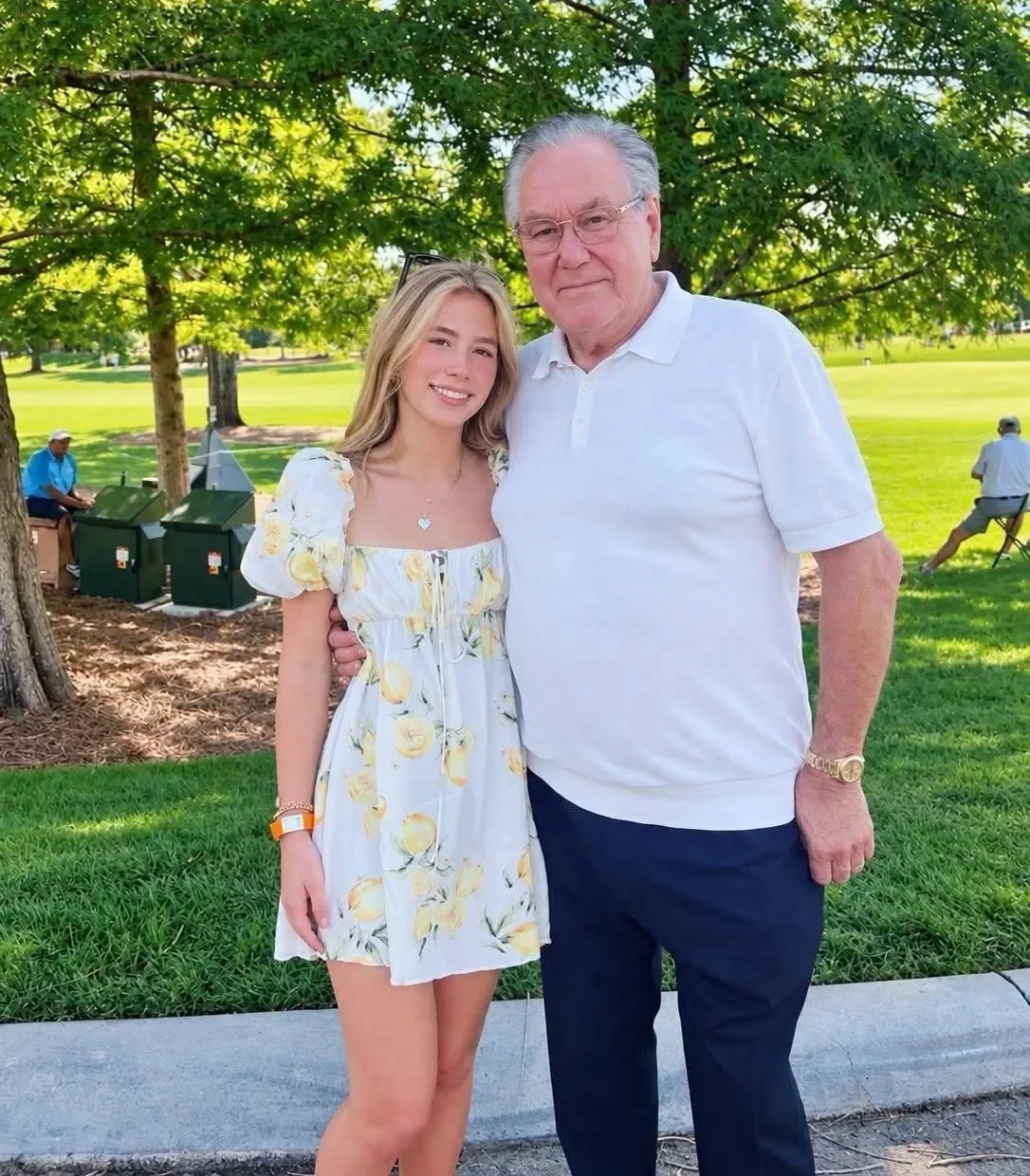
For seven years, I worked for Richard Bennett.
And for most of those seven years, I believed I understood him better than almost anyone else in the company.
I knew how he took his coffee—black, no sugar, and never after three in the afternoon.
I knew which clients could make him sigh before he even answered the phone.
I knew Tuesday mornings were usually the worst time to bring him a complicated problem. And I knew that Friday afternoons, when the office became quiet, were often when he turned unexpectedly reflective.
I knew his habits, his moods, his schedule, and all the tiny details most people never noticed.
But one Friday afternoon, when my 78-year-old boss took me to a park, I discovered there was one thing about Richard Bennett I had completely misunderstood.
His intentions.
The Job That Changed My Life
It had started seven years earlier, when I was only twenty-four.
I desperately needed a job.
My résumé was painfully short, my professional experience was almost nonexistent, and during the interview my hands shook so badly that I nearly spilled the glass of water beside me.
Richard was already in his seventies.
By then, he had spent decades turning a small operation into a respected regional company. Employees spoke about him with a strange mixture of admiration and fear.
He wasn’t cruel.
He never screamed at employees. He didn’t humiliate people during meetings or throw things when he was angry.
He didn’t need to.
Richard had perfected a much more effective technique.
He would simply lower his glasses slightly, look at you over the frames, and remain silent.
That look could make a person reconsider every decision they had made since breakfast.
I received that look several times during my interview.
By the end, I was convinced I had failed.
Then Richard closed my résumé and asked a question.
“Why should I hire someone with almost no experience?”
I swallowed.
I could have invented something impressive.
I could have pretended to be more confident than I actually was.
Instead, I told him the truth.
“You probably shouldn’t.”
One eyebrow went up.
“But if you do,” I continued, “I promise I’ll learn.”
For the first time during the interview, Richard smiled.
It was barely a smile.
But I noticed it.
“Monday morning. Eight o’clock,” he said.
And just like that, my life changed.
Seven Years of Loyalty
I entered the company as a nervous young employee who double-checked every email before hitting send.
Slowly, I learned.
Then I improved.
Eventually, people began relying on me.
Over time, I became Richard’s personal assistant.
My responsibilities went far beyond answering phone calls or organizing appointments.
I coordinated meetings, prepared important documents, handled difficult clients, fixed scheduling disasters, and sometimes solved problems before Richard even realized they existed.
There were late nights.
There were weekends.
There were mornings when I came to work sick because an important meeting couldn’t be moved.
I’m not proud of that now.
Looking back, I understand that no job should consume your entire life.
But at the time, I felt responsible.
And I had good reason.
My salary supported more than just me.
My mother lived with me, and my younger brother was still in school. I was the only person in our household with a stable income.
Losing my job wouldn’t simply mean cutting back on a few expenses.
It would affect everyone I loved.
That was why the final week of my old life frightened me so much.
The Strange Invitation
Everything began on Monday.
Richard called me into his office shortly before lunch.
He was reviewing a stack of documents when I entered.
“Emily,” he said without looking up, “do you have plans after four on Friday?”
I mentally checked my schedule.
“No.”
“Good. Wait for me downstairs.”
I paused.
“Do we have a meeting?”
Richard finally looked up.
“No.”
“Client dinner?”
“No.”
“Then where are we going?”
He returned his attention to the papers.
“Just be downstairs at four.”
Something about his tone made me uneasy.
“Is anyone else coming?”
“No. Just you and me.”
I left his office confused.
By itself, the conversation probably wouldn’t have bothered me.
But what happened the next day changed everything.
I Saw My Name on the Folder
On Tuesday, I was walking toward the accounting department when I saw the department head leaving Richard’s office.
She was carrying several folders.
One of them had my name on it.
My full name.
Printed clearly across the label.
I stopped walking.
She noticed me looking at the folder and immediately shifted it underneath the others.
“Everything okay?” I asked.
“Of course.”
Her answer came too quickly.
That was the first moment I seriously wondered whether something was wrong.
Was Richard reviewing my employment file?
Was the company restructuring?
Had I made some mistake nobody had told me about?
For the rest of the afternoon, I struggled to concentrate.
Every unusual conversation suddenly felt suspicious.
Every closed office door seemed important.
And Richard?
He acted as if nothing had happened.
That somehow made it worse.
Then the Company Lawyer Arrived
On Wednesday, Richard called the company’s lawyer.
Twice.
The first conversation lasted nearly forty minutes.
The second happened behind a closed door.
I tried to tell myself it had nothing to do with me.
Richard owned a company. He spoke with lawyers all the time.
There could have been contracts to review, disputes to resolve, or documents that needed signatures.
But I couldn’t stop thinking about the folder with my name on it.
Then Thursday arrived.
And by that point, I was almost certain Friday’s mysterious trip wasn’t going to end well.
What I didn’t know was that Richard wasn’t preparing to simply fire me.
He was preparing to make me an offer that would force me to choose between the job I had built my entire life around…
and something I never expected him to ask of me.
Related Articles

My husband had a vasectomy yet two months later I got pregnant[s]
My Family Mocked Me for Being Poor at the Auction—Then I Bought the $12.5 Million Estate They Thought Was Theirs

Woman Loses 160 Pounds to Climb Her Late Son’s Dream Mountain – At the Summit, His Twin Pulls Out a Note Revealing the Truth!