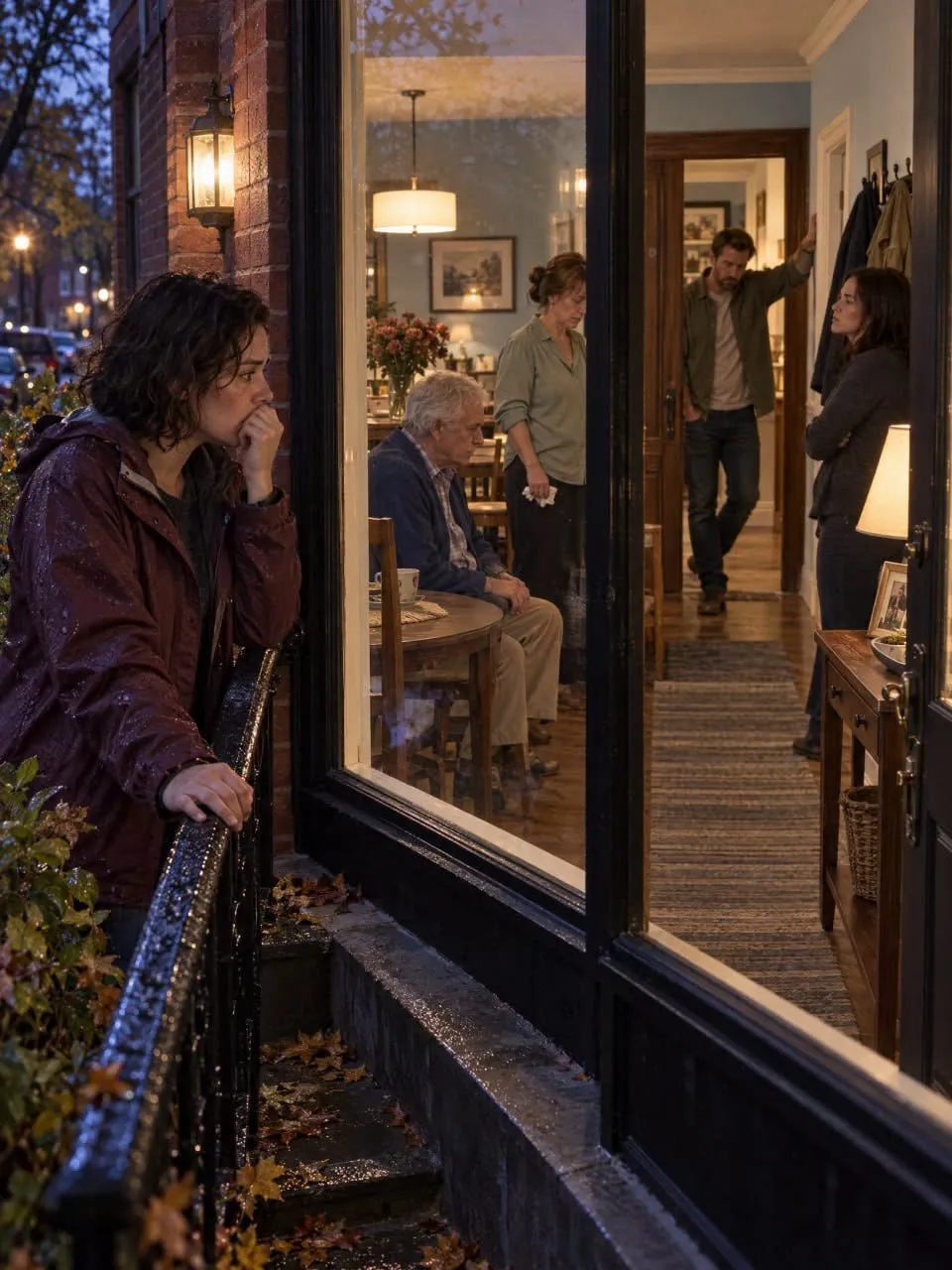
At 10:52 on a Saturday morning, my mother stood only a few feet away from me and sent a text instead of speaking.
Every weekend be gone by 11.
I looked up from the duffel bag on my bed.
She remained in the doorway with her arms folded.
“She comes from a good family,” Mom said. “Don’t embarrass us.”
Meanwhile, my father sat at the kitchen table with a cup of coffee. He barely looked in my direction.
Instead, he placed my car keys beside the sink.
“Just disappear for the weekend.”
That was the rule.
Whenever my brother Mitch brought his fiancée, Avery Lockheart, to our house, I had to leave.
At first, I thought my parents were simply ashamed of what had happened to me.
However, eight years later, I discovered the real reason.
It was far worse.
It Started After I Came Home From the Hospital
The first weekend happened before Easter in 2014.
I was eighteen and had been home from the hospital for nine weeks.
For months, depression had made ordinary life feel impossible. Eventually, I stopped attending school and struggled to get out of bed.
My doctor became concerned.
As a result, I spent eleven days in a hospital in Birmingham.
When I returned home, I had medication, weekly therapy appointments and a plan to finish senior year from the kitchen table.
Most importantly, I was getting better.
Still, my family never described it that way.
Mom called everything that happened “your situation.”
She said it the way someone might describe an embarrassing stain before guests arrived.
Then, two days before Avery’s first visit, six family photographs disappeared from the hallway.
According to Mom, the frames were being updated.
Yet one photograph remained.
It was my junior-year portrait.
Strangely, she placed it in the center of the living-room shelf beside a white candle.
“It’s for Easter,” she explained.
At the same time, she quietly moved my pill organizer into the silverware drawer.
My Brother Knew Something Was Wrong
Mitch came home from college Friday evening.
While I packed my duffel bag, he stopped at my bedroom door.
“I’m sorry about all this, Stace.”
For a moment, I felt relieved.
It was one of the kindest things anyone had said to me since I returned from the hospital.
“Sorry for what?”
Unfortunately, Mitch had already started walking away.
The following morning, Dad placed my keys beside the sink.
By 10:59, I was driving away.
Then I saw Mitch’s Jeep approaching in my rearview mirror.
Avery sat beside him laughing.
She never saw me.
Apparently, that was exactly what my family wanted.
Ruth Gave Me Somewhere to Go
I drove about forty-five minutes south to Ruth Tidwell’s peach farm.
Ruth was the grandmother of my best friend, Casey.
When she saw my duffel bag, she didn’t ask about the hospital or my parents.
Instead, she wiped her hands on her jeans.
“Hands first,” she said. “Questions can wait till supper.”
That afternoon, she put me to work thinning peaches.
Later, Ruth stopped beside a tree everyone believed had died during a harsh winter.
She scraped one branch with her thumbnail.
Under the gray bark was bright green wood.
“Scratch test,” she explained. “Brown means dead. Green means she’s living.”
Afterward, she released the branch.
“Green underneath. She’s just been through a winter.”
For some reason, those words stayed with me.
Soon, My Disappearance Became Routine
Unfortunately, the first weekend wasn’t an exception.
It became a system.
Whenever Avery visited, I had to leave.
Eventually, Mom installed a keyed lock on the outside of my bedroom door.
She claimed Avery might accidentally enter my messy room.
The explanation made little sense.
My room was probably the cleanest room in the house.
Nevertheless, Mom kept the only key.
My toothbrush moved into a plastic bag in my car.
Meanwhile, my mail disappeared whenever Avery visited.
Even my car couldn’t remain outside.
According to Mom, someone might ask who owned it.
Then the texts began arriving before every visit.
Be gone by 11.
Sometimes it was noon.
For one Fourth of July celebration, I had to leave by 9 a.m.
So I started keeping records.
I Counted Every Weekend
I bought a yellow notebook and began adding tally marks.
One mark represented one weekend.
Then I started adding dates.
Later, I added years.
By the time I turned twenty, Mom also began charging me $400 per month for room and board.
Therefore, I was paying rent for a bedroom they regularly prevented me from using.
After nearly two years, I finally asked the obvious question.
“What does Avery think about me?”
Mom didn’t hesitate.
“She thinks you live in Atlanta. You work there. You’re very busy.”
Then she handed me a dish to dry.
“Don’t make me a liar.”
At the time, I believed her.
In fact, the story seemed to explain everything.
Avery didn’t ask about me because she thought I lived somewhere else.
My room stayed locked because I supposedly wasn’t home.
Likewise, my car had to disappear because it would contradict the story.
So I accepted it.
Years later, I learned that Atlanta wasn’t the real lie.
My Life Continued Without My Family
During those years, Ruth’s farm became my second home.
Eventually, she kept a cot for me near the kitchen and two of my shirts in a closet.
In winter, she taught me how to graft fruit trees.
A graft connects living wood from two plants. For the graft to survive, the living green layers beneath the bark must meet.
My first winter, nine out of ten apple grafts survived.
Ruth didn’t say much.
However, coming from her, that was high praise.
During the week, I worked at a garden center in Hoover.
At first, I carried bags of mulch.
Later, I managed the woody plant section.
Contractors eventually began asking for me by name.
My parents knew almost none of this.
One evening, Dad asked whether I still worked at “that feed store.”
“It isn’t a feed store,” I answered. “But yes.”
The conversation ended there.
My Name Disappeared From the Family
By the end of 2017, my yellow notebook contained one hundred tally marks.
That meant one hundred weekends away.
Still, nobody had ever asked where I went.
Then my grandmother June died in March 2018.
Because Avery would attend the funeral with Mitch, Mom told me I couldn’t attend the church service.
“You can come to the graveside,” she said. “After Avery leaves.”
So I stood in the back.
Afterward, someone handed me Grandma’s obituary.
I read it once.
Then I read it again.
It listed my grandmother as being survived by one daughter and one grandson.
That grandson was Mitch.
My name wasn’t included.
Suddenly, Mom’s Atlanta story made less sense.
If everyone believed I simply lived somewhere else, why had my family removed me from the obituary?
I was still supposed to exist.
A Strange Woman Appeared at the Funeral
There was another detail I couldn’t forget.
An older woman stood away from everyone beside a group-home van.
Throughout the graveside service, she stared at Mom.
Then, as we walked toward the cars, she quietly called out.
“Linny?”
Mom kept walking.
Once we reached the car, I asked who the woman was.
“Nobody,” Mom replied. “Someone from Mama’s old church.”
Dad suddenly claimed he had forgotten his sunglasses.
He walked back toward the grave.
Four minutes later, he returned without them.
On the drive home, Mom repeatedly hummed Blessed Assurance.
She always hummed when she was frightened.
At the time, I didn’t understand why.
Avery Finally Walked Into My Life
About a year and a half later, I was working at the garden center when Avery walked in.
I recognized her immediately.
After all, I had seen countless family photographs of her.
She, however, had never seen me.
“I need a dogwood,” she said. “A really good one.”
According to Avery, the tree was for her church’s memorial garden.
“My boyfriend’s family lost someone,” she explained.
Naturally, I assumed she meant my grandmother.
So I chose one of our healthiest dogwoods.
Before selling it, I inspected the graft union.
Then I wrote my standard care instructions on the nursery tag.
Graft is good. Water deep the first summer. She’ll bloom.
At the gate, Avery stopped and looked at me.
“You look like someone I should know.”
For one second, I considered telling her my name.
Instead, I smiled and let her leave with the tree.
Then My Brother Got Engaged
That Christmas, Mitch proposed to Avery.
Soon afterward, Mom sent me another message.
Wedding is June 13th. Keep that weekend free.
Initially, I thought she meant I should prepare for the wedding.
Then I realized what “keep that weekend free” actually meant.
I wasn’t invited.
Instead, she expected me to disappear again.
When I confronted her, she gave me the same kind of vague answer.
“It’s not the right time for you to be there.”
Unfortunately, I still didn’t understand what she was protecting.
Even During the Pandemic, I Had to Hide
When the pandemic forced everyone to remain home, I finally spent several uninterrupted weeks inside my own house.
One afternoon, Avery called Mom through FaceTime.
I happened to be making lunch in the background.
The moment Mom noticed me, her expression changed.
She covered the screen with one hand.
“Out of frame,” she whispered.
So I carried my plate to the only corner Avery couldn’t see.
I ate standing up while Mom continued talking.
By then, I was an adult hiding inside the house where I paid rent.
Yet I still believed Avery thought I lived in Atlanta.
Why I Didn’t Leave Earlier
Looking back, leaving seems obvious.
At the time, however, it wasn’t simple.
My father’s employer provided my health insurance.
That insurance covered both my medication and therapy.
The garden center didn’t offer comparable coverage.
Whenever I resisted my parents’ rules, Mom reminded me of that fact.
“You’re on our insurance until you’re twenty-six,” she would say. “Our house, our rules.”
Eventually, I turned twenty-six and purchased my own coverage.
For the first time, the insurance card had only my name on it.
Even then, I stayed.
After years of being trained to accept something, recognizing that you can leave doesn’t happen overnight.
Easter 2022 Changed Everything
Three months before Mitch’s wedding, another message arrived.
Lockhearts for supper Saturday. Sunrise service Sunday. Be gone by 10:00.
By then, Avery’s parents had also become regular visitors.
Mom called them “our church friends.”
That Saturday morning, I left at 9:40.
Before driving away, I opened my yellow notebook.
Tally mark 211.
April 16, 2022.
Later that evening, I reached for my medication at Ruth’s house.
My Saturday dose was missing.
The bottles were still at home.
Worse, they were inside my locked bedroom.
Ruth looked at me.
“Go get what’s yours,” she said. “Then come straight back.”
So I drove home.
Someone Was Praying Outside My Bedroom
The Lockhearts’ vehicle was still in our driveway.
Therefore, I parked down the street and approached through the dark side yard.
A hallway window near my bedroom was slightly open.
Through it, I saw Suzanne Lockheart standing outside my bedroom.
Mom stood next to her holding a tissue.
Avery held Mitch’s arm.
Meanwhile, Dad stared at the floor.
Suzanne slowly placed her hand against my bedroom door.
“May I?”
Mom nodded.
Suzanne lowered her head and began praying.
Then Mom wiped her eyes.
“I still can’t bring myself to open it.”
I froze outside the window.
Nobody prayed over a bedroom door like that unless they believed the person who belonged there would never return.
For the first time, I realized the truth might be much bigger than Atlanta.
I Returned After Everyone Left
Eventually, the Lockhearts drove away.
I waited until the house became quiet.
Near midnight, I entered through the back door.
Something sat on the dining-room table, partly covered with tissue paper.
At first, I thought it was a gift.
Then I moved closer.
Inside was a framed photograph of a blooming dogwood tree.
Beside the photograph sat a granite memorial stone.
I looked down.
My name was engraved on it.
In Loving Memory of Anastasia Dunaway
1995–2014
Underneath were the words:
She is not dead but sleepeth.
For several seconds, I couldn’t understand what I was seeing.
Then I noticed something else.
I Had Sold Them My Own Memorial Tree
A white nursery tag hung from the dogwood in the photograph.
I recognized the handwriting immediately.
It was mine.
Graft is good. Water deep the first summer. She’ll bloom.
My stomach dropped.
It was the same dogwood I had sold Avery at the garden center.
Suddenly, eight years of strange behavior made sense.
The candle beside my photograph.
The missing family pictures.
Grandma’s obituary.
The locked bedroom.
My hidden medication.
Avery telling me her boyfriend’s family had “lost someone.”
Suzanne praying outside my door.
My mother had never told Avery I lived in Atlanta.
Instead, she had allowed the Lockheart family to believe I was dead.
For eight years.
Worse, I had personally chosen the tree planted in my own memory.
I Left That Same Night
For a long time, I sat silently in Mom’s chair.
Then I noticed her keys beside the coffee maker.
I unlocked my bedroom and packed one bag.
Medication.
Birth certificate.
Ruth’s grafting knife.
My yellow notebook.
I didn’t take much else.
Before leaving, however, I did one final thing.
I left my bedroom door wide open.
The lamp remained on.
The key stayed in the lock.
For years, Mom had claimed she couldn’t bear to open that room.
Now she would have to look inside.
Then I called Ruth.
She already knew what I needed to do.
“Go see April,” she said.
She meant Ingred, an orchard owner in Washington who had previously offered me work.
So I started driving.
My Last Message to Them Was Simple
Near Memphis, dawn began appearing behind me.
I pulled over and sent my parents one message.
I’m alive. Don’t look for me.
Then I opened the yellow notebook.
Under tally mark 211, I drew a straight line.
Later, I learned that while I crossed the Mississippi, my family attended Easter sunrise service.
There, my mother listened as my name was read among the dead.
She already knew I had left alive.
Still, she said nothing.
Washington Gave Me a New Beginning
Four days later, I reached the orchard in Washington.
Ingred met me near the packing shed.
Interestingly, she looked at my hands before studying my face.
Within a week, I had a new phone number, a new bank account and a bunk with the seasonal workers.
I started at around $17 per hour.
More importantly, nobody there knew me as the girl who had supposedly died.
They only knew my work.
Over time, Ingred gave me more responsibility.
Eventually, she put me in charge of a twelve-person crew.
In spring 2023, ninety-four percent of our grafts survived.
I wrote 94% in the front of my yellow notebook.
For once, a number represented something I had created instead of something I had survived.
I Finally Built a Life of My Own
Soon afterward, I enrolled in a professional tree-certification program.
My old horticulture teacher, Mr. Witcom, wrote my recommendation.
Later, I found a therapist.
I also met Callum, a mechanic who worked around the orchard.
Our relationship grew slowly.
Most importantly, nobody asked me to hide.
By spring 2025, Ingred promoted me to assistant orchard manager.
That promotion brought more responsibility.
It also meant my photograph appeared on the orchard website.
For the first time since I was eighteen, my face was publicly online.
I didn’t remove it.
People could see me now.
Four Years Later, My Family Finally Found Me
Ironically, my family didn’t find me because they were searching.
Suzanne found me because she wanted to create a horticulture scholarship in memory of me.
She contacted my old high school.
Eventually, the paperwork reached Mr. Witcom.
When he saw my name and supposed death date, something didn’t make sense.
After all, he had written me a recommendation in 2023.
So he called Dad.
“I wrote your daughter a recommendation letter in 2023. Is there some kind of mistake?”
Apparently, Dad remained silent for several seconds.
Then he said:
“Give us until Easter.”
That night, Mitch searched my name online.
It took him about twenty minutes to find me.
Four years had passed.
Apparently, twenty minutes was all it ever required.
Mom’s First Call Wasn’t an Apology
The next morning, the orchard office phone rang.
Ingred answered.
Then she handed the receiver to me.
“Your mother.”
I picked it up.
“Anastasia.”
There was no hello.
She didn’t ask whether I was safe.
She didn’t ask where I had lived for four years.
Instead, she said:
“I need you to call Suzanne Lockheart.”
Mom already had another story prepared.
According to the new version, I had disappeared in 2014.
My family supposedly hadn’t known whether I was alive.
Suzanne had simply misunderstood everything.
Mom needed me to confirm it.
“Tell her you left in 2014 and we didn’t know if you were alive.”
Then she offered me something.
“Come home for Christmas.”
As if Christmas dinner could erase eight years.
Finally, she added:
“You were always so good at disappearing. I just need you to do it one more time.”
My Notebook Proved She Was Lying
I reached into my jacket.
The yellow notebook was still there.
Inside were 211 dated weekends.
They began in 2014.
They ended in 2022.
Therefore, Mom’s new story could never work if anyone saw it.
She needed a daughter who had vanished in 2014.
My notebook proved I had remained in that house for eight more years.
Two days later, Mitch contacted me.
Please call me. Not Mom’s number. Mine.
So I did.
Mitch Finally Explained How Everything Started
For a while, neither of us spoke.
Then his voice broke.
“It was me, Stace. I said it first.”
Back in 2014, Avery told Mitch about her brother Trip.
He had died in a car accident before graduation.
While talking about grief, she explained how alone she had felt.
Mitch’s sister—me—had recently been hospitalized.
So he told her:
“We lost my sister in February.”
According to Mitch, he meant that the hospitalization had changed me.
Avery misunderstood.
She thought I had died.
When she began crying, Mitch didn’t correct her.
Then Easter approached.
Mom discovered the lie.
Instead of ending it, she protected it.
“People understand grief,” she reportedly told Mitch.
And that was how my disappearance began.
Dad Revealed an Even Older Family Secret
Later, Dad called.
He didn’t begin with an apology.
Instead, he told me Mom had an older sister.
Her name was Rosalind.
When Rosalind was twenty, she developed schizophrenia and entered a psychiatric hospital.
Afterward, my grandparents moved to Hoover.
At their new church, they told people Rosalind had “gone home to the Lord.”
In other words, they allowed people to believe their living daughter was dead.
Immediately, I remembered the woman at Grandma’s funeral.
The woman beside the group-home van.
The woman who had called Mom “Linny.”
It had been Rosalind.
Dad explained it simply.
“Your mother learned it from hers. That’s not an excuse. It’s just where it came from.”
For the first time, I understood part of Mom’s behavior.
However, understanding wasn’t the same as forgiving.
Dad Could Have Found Me
Before hanging up, Dad admitted something else.
After I left Alabama, he checked my bank account.
My final transaction had appeared at a gas station in Cheyenne.
Dad worked in banking.
He could have continued tracing the account.
Instead, he stopped.
“I saw Cheyenne,” he said. “I didn’t look after that.”
That sentence answered another question.
My family hadn’t spent four years desperately searching for me.
They simply hadn’t searched.
I Returned to Alabama
That Easter, I asked Ingred for time off.
She looked at the orchard calendar.
“Go,” she said. “The trees will wait.”
So I returned to Alabama.
First, I visited Rosalind.
She had Mom’s cheekbones and a much easier smile.
Beside her bed sat an old picture of Mom as a teenager.
Rosalind also showed me an old church bulletin.
According to it, the family had given thanks for Rosalind, who had supposedly “gone home to the Lord.”
She had been alive the entire time.
Eventually, I told her about my own memorial stone.
She listened carefully.
Then I went to see Suzanne.
Suzanne Finally Heard the Truth
The dogwood I had sold Avery was blooming behind the church.
My memorial stone remained underneath it.
When Suzanne saw me, recognition came slowly.
“Anastasia?”
“Yes, ma’am.”
We went to her house.
There, I told her everything.
The hospital.
The first weekend.
The locked bedroom.
My medication.
The 211 weekends.
Finally, I placed the yellow notebook on her kitchen table.
She turned the pages slowly.
“That was a birthday supper.”
Another page.
“That was the Fourth of July.”
Then she reached April 16, 2022.
Her expression changed.
“That was the night I touched your door.”
“I know,” I replied. “I was outside the window.”
Suzanne covered her mouth.
She Asked Me What I Wanted
After reading the notebook, Suzanne looked toward the memorial garden.
“What do you want, Anastasia?”
There were many possible answers.
I could demand apologies.
I could demand the tree be removed.
Instead, I said:
“Don’t read my name Sunday.”
Suzanne nodded.
That Saturday night, Mitch finally confessed everything to Avery.
Thirty minutes later, she messaged me.
She wanted me to attend Easter sunrise service.
So I agreed.
This Time, I Didn’t Disappear
The next morning, the memorial garden was cold and quiet.
Around eighty chairs faced the church wall.
The dogwood was covered in white blossoms.
My memorial stone remained beneath it.
Ruth, Casey and Mr. Witcom sat near the back.
I stood beside the tree.
Then my parents arrived.
Dad saw me first.
Mom noticed me seconds later.
She immediately approached.
“What are you doing here?” she whispered.
For once, I didn’t move.
“Standing where you can see me.”
Suzanne Changed the Memorial Service
At 6:30, Suzanne stepped to the lectern.
She read each memorial name slowly.
Eventually, she reached the end.
Then she folded her paper.
“This tree was planted for a young woman we believed we had lost,” she said. “She is here this morning.”
The crowd became silent.
Suzanne invited me forward.
However, I didn’t give a speech.
Instead, I read one name.
Thomas Lockheart III. Trip.
Avery’s brother.
Then I stepped away.
Nothing else needed to be said.
Mom Tried to Save the Story One Last Time
After the service, Mom approached Suzanne.
“Suzanne, I never said she died.”
Suzanne looked directly at her.
“No,” she replied. “You just let me grieve her.”
Mom then looked toward me.
I knew exactly what she wanted.
She needed me to say I had disappeared in 2014.
One sentence could protect her version.
Instead, I remained silent.
Then I reached toward the dogwood and gently scratched the bark.
Green.
Alive.
Avery stepped beside me.
She looked at the nursery tag.
Then she looked at my hands.
“You sold me this tree.”
“I checked the graft.”
Finally, everything connected.
Dad Finally Said the Words
A man from church approached my father.
“Glenn, who is this young lady?”
Dad looked toward Mom.
Then he looked at me.
For eight years, my family had avoided the simplest truth.
Finally, he said it.
“That’s my daughter.”
Mom picked up her purse and left through the side gate.
For years, she had controlled when I disappeared.
That morning, she disappeared first.
The Memorial Stone Was Removed
Two weeks later, the church removed the stone bearing my name.
Suzanne asked what I wanted done with it.
“Send it to my mother.”
So she did.
Later, Dad told me it was sitting in their garage facing the wall.
The dogwood, however, remained.
I wanted it to stay.
After all, it was a healthy tree.
I had chosen it myself.
My Life Didn’t Suddenly Become Perfect
Mitch and Avery separated for a while.
Later, they began marriage counseling.
I don’t know what will happen between them.
Occasionally, Avery sends me questions about plants.
Mitch calls every Sunday.
I answer some of those calls.
During one conversation, he said:
“I don’t know how to be your brother yet. I’d like to learn.”
For once, he didn’t ask me to protect him.
That mattered.
Mom Still Hasn’t Apologized
My mother has never given me the apology I once imagined.
However, I no longer plan my life around receiving one.
Eventually, Dad convinced her to visit Rosalind.
They spent forty minutes together.
That evening, Mom sent me a short message.
Roz says you came to see her. Thank you.
It wasn’t an apology.
Still, it was the first time she had thanked me for something other than leaving.
The Scholarship Survived
Suzanne didn’t cancel the horticulture scholarship.
Instead, she renamed it for Trip.
She also expanded it to students who work with their hands—in soil, wood or engines.
At Mr. Witcom’s final awards ceremony, the scholarship went to a girl who had grafted her first apple tree that spring.
Later, he sent me a picture.
His message contained only two words.
Good hands.
Nothing else was necessary.
Then Ruth Sent Me One Final Photograph
At the end of May, Casey sent me a picture from Ruth’s greenhouse.
Several small pots sat beneath a misting bench.
Each contained a cutting.
With Suzanne’s permission, Casey had taken those cuttings from the memorial dogwood.
My tree.
The tree planted because people believed I was dead.
It was still too early to know whether the cuttings would root.
However, Casey wrote:
Every one of them is still green.
That evening, I opened my yellow notebook.
Two hundred eleven tally marks remained inside.
A date sat beside each one.
Below the final tally was the line I had drawn the night I left.
I haven’t added another number since.
Instead, I wrote one word beneath it.
Green.
For eight years, I learned how to leave rooms quietly.
I learned how to disappear before guests arrived.
I learned how to make myself small enough to protect everyone else’s story.
For a long time, I thought disappearing was simply something I was good at.
I was wrong.
I had simply never found the right place to grow.
For eight years, my family decided when I disappeared.
Now I decide where I grow.