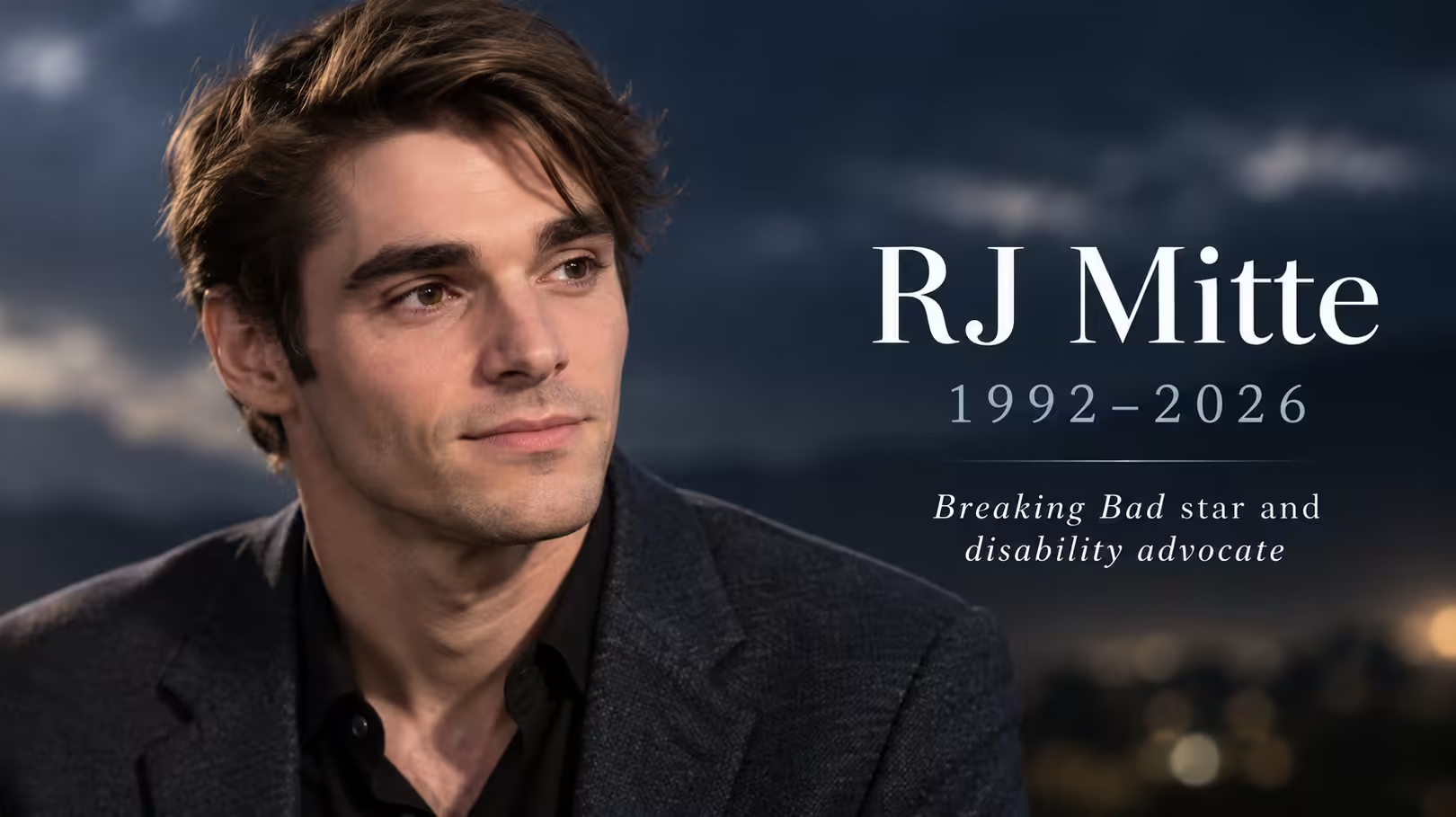
The entertainment world is mourning the sudden death of actor RJ Mitte, best known for playing Walter White Jr. in Breaking Bad.
Mitte died on October 12, 2026, at just 34 years old.
For millions of viewers, he will always be remembered as Walter “Flynn” White Jr. However, his impact went far beyond one famous television role.
Throughout his life, Mitte also became a powerful advocate for people with disabilities.
His death has now left fans, friends, and former co-stars remembering the young actor who helped change television representation.
RJ Mitte Became Famous Through Breaking Bad
RJ Mitte joined Breaking Bad when he was still a teenager.
The AMC series premiered in 2008 and quickly became one of television’s most celebrated dramas.
Bryan Cranston played Walter White, a chemistry teacher who entered the criminal drug world after receiving a cancer diagnosis.
Meanwhile, Mitte played Walter’s teenage son.
His character initially went by Walter White Jr. Later, he often asked people to call him Flynn.
Throughout the series, Walter Jr. remained separated from much of his father’s secret criminal life.
However, as Walter White’s lies began collapsing, his son became increasingly important to the story.
His Role Felt Deeply Authentic
One important part of Mitte’s performance came from his own life.
Both Mitte and Walter Jr. had cerebral palsy.
Therefore, Mitte brought personal experience to the character rather than simply portraying a disability from the outside.
He had received his cerebral palsy diagnosis when he was three years old.
During his childhood, he faced physical challenges and underwent treatment. Still, he continued pursuing opportunities that eventually led him toward acting.
When Breaking Bad arrived, that experience helped him create a character audiences viewed as genuine and complex.
Walter Jr. was not defined only by his disability.
Instead, he was a teenager dealing with family problems, school, anger, love, and disappointment.
That representation became an important part of Mitte’s legacy.
Breaking Bad Changed His Life
Few television shows have created a cultural impact as large as Breaking Bad.
The series followed Walter White’s transformation from an ordinary teacher into a powerful criminal figure.
Yet Walter’s family remained at the emotional center of the story.
That made Mitte’s character especially important.
Walter Jr. loved his father for much of the series. However, he slowly discovered that the man he admired had become someone completely different.
Those later scenes gave Mitte some of his most emotional moments on the show.
As a result, fans watched him grow from a young actor into an important member of the celebrated cast.
The series ended in 2013 after five seasons.
Still, Mitte’s career and advocacy continued.
He Continued Acting After Breaking Bad
Mitte did not disappear after the final episode of Breaking Bad.
Instead, he continued working in television and film.
He appeared in projects including Switched at Birth, Now Apocalypse, The Guardians of Justice, and several independent films.
Moreover, he appeared in the 2021 movie Triumph.
In that film, Mitte played a high school student with cerebral palsy who wanted to become a wrestler.
The role once again allowed him to challenge assumptions about people living with disabilities.
More recently, he had also been promoting the film Talking to Strangers.
Therefore, Mitte remained professionally active shortly before his death.
His Work Went Beyond Acting
Although millions knew him from television, Mitte repeatedly used his fame for another purpose.
He became an outspoken disability rights advocate.
He worked with organizations that supported people with cerebral palsy and other disabilities.
In addition, he served as an ambassador for United Cerebral Palsy and Shriners Children’s.
Mitte also became involved with The Mitte Foundation.
Through his advocacy, he pushed Hollywood to create better opportunities for actors with disabilities.
He wanted audiences to see disabled characters as complete human beings.
They could be heroes, villains, romantic leads, professionals, parents, or ordinary people.
For Mitte, representation meant more than simply appearing on screen.
It meant changing how society viewed disability.
News of His Death Shocked Fans
Mitte died in Brownsville, Texas, on Monday, October 12.
Initial statements from his representatives confirmed his death but did not immediately reveal the circumstances.
Later, his representative confirmed that the actor had died by suicide.
The news quickly spread around the world.
For longtime Breaking Bad fans, the announcement felt especially difficult because many had watched Mitte grow up on television.
He first joined the series as a teenager.
Years later, viewers continued following his career and advocacy work.
Therefore, his death at only 34 felt painfully sudden.
Bryan Cranston Remembered His On-Screen Son
Bryan Cranston was among the Breaking Bad stars who publicly mourned Mitte.
Cranston had played Walter White, making him Mitte’s on-screen father throughout the series.
After learning about Mitte’s death, Cranston shared his grief publicly.
He remembered meeting Mitte when the young actor was only 14 years old.
Moreover, he praised the determination and energy Mitte brought to his life and career.
The two had remained connected after Breaking Bad ended.
According to Cranston, they had even exchanged messages in recent weeks and discussed meeting again.
That detail made the loss even more painful.
Breaking Bad Cast Members Shared Tributes
Other members of the Breaking Bad family also remembered Mitte.
Aaron Paul, Dean Norris, and others shared tributes following the announcement.
The reactions showed that Mitte had remained important to the people who worked beside him.
For audiences, cast members often become permanently connected to their fictional characters.
However, relationships behind the scenes can continue long after cameras stop rolling.
Mitte spent several important years of his life working with the Breaking Bad cast.
Therefore, his death affected people who had known him since he was a teenager.
Fans Remember More Than Walter White Jr.
Walter White Jr. will always remain Mitte’s most recognizable role.
However, reducing his life to Breaking Bad would miss much of his story.
Mitte used the visibility that came from the series to speak about disability, bullying, inclusion, and opportunity.
He also showed young people with cerebral palsy that they could pursue ambitious careers.
For some viewers, seeing him on one of television’s biggest shows carried enormous meaning.
He was not hidden in the background.
Instead, he played a central member of the White family throughout the series.
That mattered.
Moreover, his success opened conversations about who gets represented on television and who gets hired to tell those stories.
A Legacy That Reached Beyond Television
RJ Mitte achieved something unusual during his short life.
He became part of one of television’s most iconic shows while also turning his fame into advocacy.
Millions will remember the breakfast scenes, family arguments, and emotional confrontations involving Walter Jr.
Others will remember Mitte speaking publicly about inclusion and disability rights.
Both parts of his legacy matter.
Breaking Bad introduced RJ Mitte to the world.
However, he spent the years afterward showing audiences that he was much more than one character.
He was an actor, advocate, philanthropist, and public voice for greater representation.
RJ Mitte was only 34 when he died.
Yet his work had already influenced television and the people who saw themselves represented through him.
For fans returning to Breaking Bad, Walter White Jr. will now carry another meaning.
Behind the character was a young actor who turned his own challenges into a career and then used that career to help others.
His performances remain on screen.
His advocacy also leaves a lasting mark.
And for the millions who watched him grow up as Walter White’s son, RJ Mitte will not easily be forgotten.
If you or someone you know is struggling with suicidal thoughts or is in immediate danger, contact local emergency services or a suicide crisis service in your country.