After 34 years of marriage, my husband secretly took our winning lottery ticket, filed for divorce, and tried to claim $2.4 million for himself.
He thought I would never discover what he had done.
But when he arrived at the Georgia Lottery Claims Center, one small detail stopped everything.
My name was already written on the back of the ticket.
And there was something else he didn’t know.
For nineteen years, I had been keeping a record that would eventually expose his betrayal.
The Phone Call That Changed Everything
At 2:47 on a Friday afternoon, my phone rang.
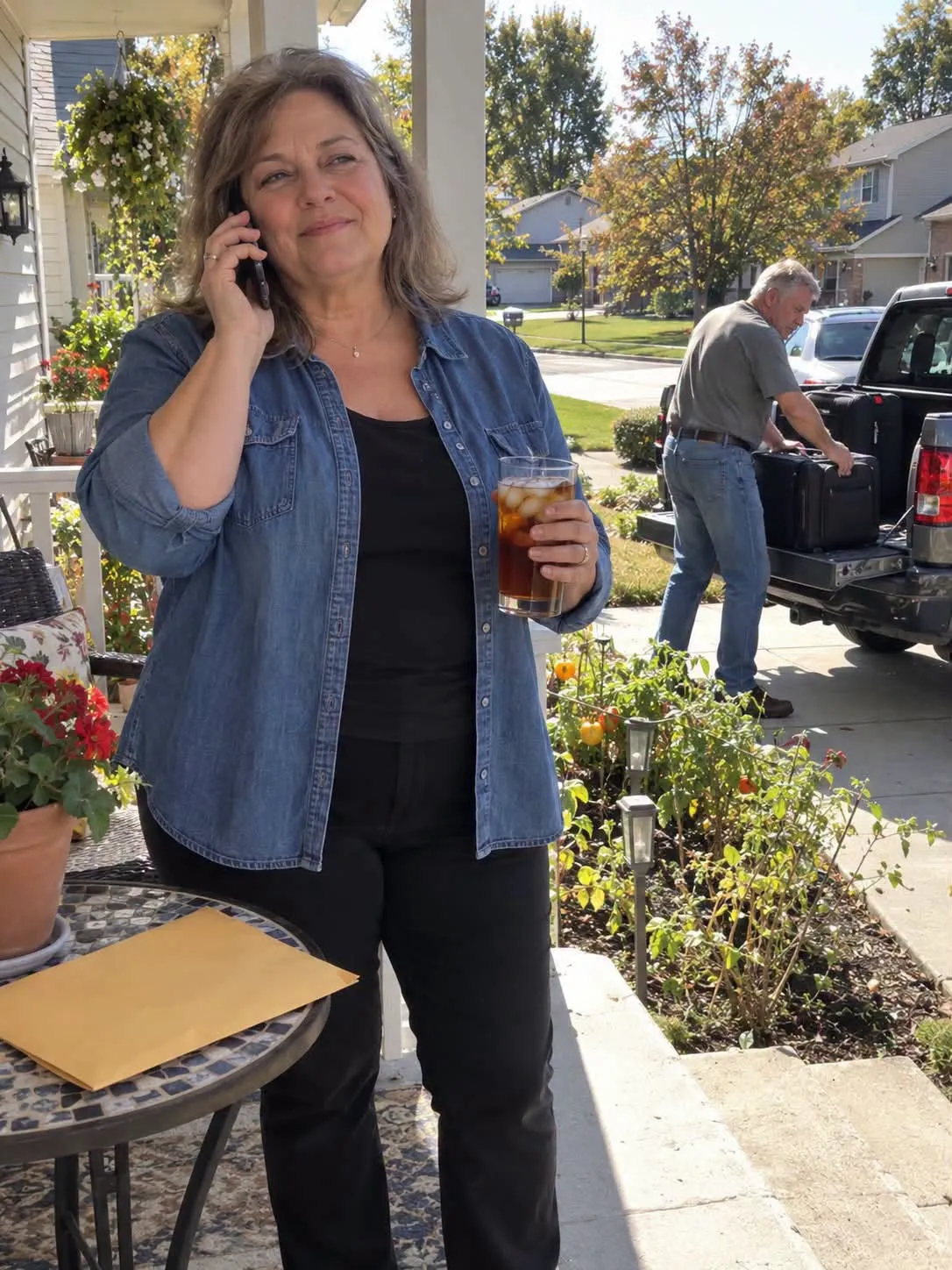
I was sitting on my porch in Dalton, Georgia, enjoying a glass of iced tea. My mother’s old white wicker rocking chair creaked beneath me.
The number was from Atlanta.
“Is this Patricia Dunn?” a woman asked.
“Yes, speaking.”
“My name is Linda Holloway. I’m calling from the Georgia Lottery Claims Center. Your husband is here attempting to claim a winning ticket.”
I looked toward my garden.
“I thought he might be.”
The woman hesitated.
“Mrs. Dunn, there’s a problem. The ticket has already been signed, but the signature doesn’t match your husband’s identification.”
Behind her, I heard Gary shouting.
“That’s my wife’s handwriting! We’ve been married thirty-four years! That ticket belongs to us!”
I took another sip of tea.
“No,” I replied calmly. “I imagine his identification wouldn’t match.”
What Gary didn’t realize was that this story had begun nineteen years earlier.
And it began with my mother’s final request.
Thirty-Four Years of Putting Everyone Else First
My name is Patricia Ann Dunn, although everyone calls me Patty. I’m fifty-eight years old.
I married Gary when I was twenty-four. He was a hardworking forklift driver with a red pickup truck and a wonderful sense of humor.
We met at a church fish fry in 1990. Six months later, he proposed outside a Dairy Queen.
I believed we would grow old together.
We had three children: Robby, Tessa, and Kyle.
While Gary worked long hours, I handled nearly everything at home. I prepared meals, helped with homework, attended school events, and cared for our children whenever they were sick.
I also worked at the Walker County Health Department for twenty-two years.
However, Gary controlled our finances.
Both paychecks went into our joint account, but he decided how we spent the money.
Every Sunday, he handed me $200.
That money had to cover groceries, gasoline, and anything our children needed.
Whenever I asked for more, he questioned every expense.
“Patty, what are you feeding these kids? Steak?”
Eventually, I stopped asking.
I clipped coupons, bought secondhand clothes, and learned to make every dollar stretch.
At the time, I convinced myself this was simply how marriage worked.
My Mother’s Last Request
In March 2006, my mother was dying of ovarian cancer.
I spent fourteen months caring for her. Meanwhile, Gary rarely offered help.
Three days before she passed away, she asked me to sit beside her bed.
“Patty, promise me something.”
“Anything, Mama.”
She held my hand.
“You’ve spent your entire life putting everyone else’s name first. Your husband, your children, your family.”
I tried to interrupt, but she continued.
“The house is in Gary’s name. The truck is in his name. Even your mailbox has his handwriting.”
“Those things don’t matter, Mama.”
“They do,” she whispered.
Then she told me something I never forgot.
“When your father died, I was sixty-four. I didn’t know how to write a check or manage our accounts. I’d spent my whole life depending on someone else.”
Tears filled her eyes.
“Find one thing that’s yours, Patty. Something small. Put your own name on it.”
She squeezed my hand.
“Do it every week, so you never forget who you are.”
Three days later, my mother died.
I was holding her hand.
The Two-Dollar Promise
The first Friday after her funeral, I stopped at the Highway 41 Gas & Go.
The owner, Mr. Arjun Mehta, knew my family well.
When he offered his condolences, I unexpectedly began crying.
He handed me a tissue and waited patiently.
Then I noticed the lottery machine.
“Mr. Mehta, how do you buy a lottery ticket?”
He explained the process and handed me a play slip.
I selected five numbers.
3, 11, 14, 16, and 22.
Each number represented someone important.
Three was Robby’s birthday. Eleven was Tessa’s. Twenty-two was Kyle’s.
Sixteen represented my wedding anniversary, while fourteen marked the day my mother died.
The ticket cost two dollars.
When Mr. Mehta handed it to me, I noticed the signature box on the back.
“You should sign that,” he suggested.
Immediately, I remembered my mother’s words.
I picked up a blue pen.
Instead of writing Patty Dunn, I signed my complete name.
Patricia Ann Whitmire Dunn.
Whitmire was my maiden name.
Underneath, I wrote:
Week 1. For Mama.
Then I asked Mr. Mehta to initial the ticket and add the date.
He agreed without asking questions.
When I returned home, I placed the ticket on my refrigerator beneath a pineapple magnet that had belonged to my mother.
The ticket didn’t win.
But winning wasn’t why I bought it.
Nineteen Years of Friday Tickets
Every Friday afterward, I returned to the same gas station.
I bought the same two-dollar ticket with the same five numbers.
Then I signed the back.
Mr. Mehta initialed it and recorded the date.
Sometimes, I added little notes.
Week 87. Robby graduated.
Week 211. Tessa passed her nursing exams.
Week 340. Kyle enlisted. I’m scared.
Other weeks, I wrote things I couldn’t tell anyone.
Week 133. Gary forgot our anniversary again.
Week 298. Gary embarrassed me in front of his brother.
Week 617. Found a restaurant receipt in Gary’s jacket. Dinner for two. I wasn’t there.
After checking the results, I stored each losing ticket in a shoebox behind my winter boots.
Gary laughed at my habit.
“Still throwing money away, Patty?”
“It’s only two dollars.”
“Two dollars every week adds up!”
He never asked why I played those numbers.
More importantly, he never looked at the back.
By September 2025, I had purchased 988 tickets.
Every one carried my name.
And nearly every one was safely stored in that shoebox.
The Week Everything Changed
In September, my younger sister June was hospitalized with serious heart problems.
Doctors told her she needed another valve replacement.
Unfortunately, her insurance wouldn’t cover the entire procedure. She faced more than $50,000 in medical expenses.
June didn’t have that kind of money.
She worked at a discount store and lived alone in a rented trailer.
I drove to Chattanooga every day to sit beside her.
That Friday, I stopped at Mr. Mehta’s station as usual.
He handed me my ticket.
I signed it in the parking lot and wrote:
Week 988. June’s in the hospital again. Third surgery. Please.
Mr. Mehta came outside and initialed it.
When I arrived home late that evening, I placed it beneath the pineapple magnet.
The following morning, I rushed back to the hospital.
For the first time in nineteen years, I forgot to check the lottery results.
The Missing Ticket
On Wednesday morning, I finally returned to my normal routine.
I walked into the kitchen and looked at the refrigerator.
The pineapple magnet was there.
But the ticket was gone.
I searched the floor, the drawers, and behind the refrigerator.
Nothing.
“Gary, have you seen my lottery ticket?”
He barely looked away from the television.
“Probably fell somewhere. It’s only two dollars, Patty.”
Something about his answer bothered me.
That evening, he made me tea.
He even asked about June.
Gary hadn’t shown that much interest in my sister for years.
I couldn’t understand his sudden kindness.
Until Thursday morning.
I opened the newspaper and turned to the lottery results.
The winning numbers were:
3 — 11 — 14 — 16 — 22
I checked them again.
Then a third time.
They were my numbers.
Every single one.
The jackpot was $2,412,000.
And the newspaper reported that the winning ticket had been sold at Highway 41 Gas & Go.
My ticket.
The one missing from my refrigerator.
I slowly sat down on the kitchen floor.
Suddenly, Gary’s unusual behavior made sense.
He knew.
And he had taken it.
The Divorce Papers
On Friday morning, Gary entered the kitchen carrying a manila envelope.
He placed it beside my breakfast.
“Open it.”
Inside were divorce papers.
He had filed them three days earlier.
“I’ve been unhappy for years,” he announced. “The children are grown. There’s no reason to keep pretending.”
I stared at him.
After thirty-four years, he was leaving.
Then he began explaining our finances.
He claimed the house was heavily mortgaged. He said the truck, boat, and retirement accounts were all in his name.
“So don’t expect much, Patty.”
He smiled.
“Half of nothing is nothing.”
I didn’t argue.
“Okay, Gary.”
He looked disappointed by my reaction.
Within two hours, he had packed his clothes and fishing equipment.
At the front door, he touched his back pocket.
His wallet.
I noticed the gesture immediately.
He was checking whether the lottery ticket was still there.
Then he drove away.
Toward Atlanta.
Waiting for the Call
After Gary left, I washed the breakfast dishes.
Then I watered my tomatoes.
Finally, I went upstairs and pulled the old shoebox from my closet.
Inside were 987 losing lottery tickets.
Each one carried my signature.
Each one documented another Friday of my life.
I took the box outside and sat in my mother’s rocking chair.
Then I waited.
At 2:47 p.m., my phone rang.
It was the Georgia Lottery Claims Center.
Gary had arrived with the winning ticket.
And now someone was asking why another person’s name appeared on the back.
The Detail Gary Never Expected
“Mrs. Dunn,” Linda said, “can you tell me exactly what’s written on this ticket?”
“Yes.”
I closed my eyes.
“Patricia Ann Whitmire Dunn.”
She paused.
“Anything else?”
“Underneath, it says, ‘Week 988. June’s in the hospital again. Third surgery. Please.'”
I heard her take a breath.
“And beside my signature, you’ll find the initials A.M. and the date September 12, 2025.”
“Who is A.M.?”
“Arjun Mehta. He sold me the ticket.”
I explained our nineteen-year tradition.
Then I told her about the shoebox.
“I have 987 tickets right here, Linda. Every one signed and numbered.”
The line went quiet.
“The nine hundred and eighty-eighth ticket,” I continued, “is sitting in your office with my husband.”
Linda placed me on hold.
When she returned, her tone had changed.
She explained that the claim would require further investigation.
Gary could no longer simply walk away with the money.
The Gas Station Owner’s Secret
During the investigation, Mr. Mehta confirmed that he had sold me the ticket.
He also revealed something I never knew.
For nineteen years, he had kept a written record of my Friday purchases.
A thick binder contained dates, ticket numbers, and notes about my visits.
He had documented nearly every transaction.
When investigators asked why, he told them about his mother.
Years earlier, his father had placed her name on the family’s business license.
That simple decision later protected her ownership during a family dispute.
“When Mrs. Dunn asked me to witness her signature,” he explained, “I remembered my mother.”
He had kept the records because he understood why having something in your own name mattered.
His documentation supported my account.
The winning ticket’s details matched his records.
Meanwhile, Gary struggled to explain why he possessed a ticket signed by someone else.
The lottery claim became part of a much larger legal dispute.
The Truth About Our Marriage
I hired Delores Simmons, an experienced family lawyer and an old school friend.
She reviewed the lottery records, our finances, and Gary’s divorce petition.
Then she discovered something worse.
Gary had secretly taken out a second mortgage on our house.
He had also transferred money from our joint account into a separate account in Chattanooga.
The balance was approximately $62,000.
I had never known it existed.
“Patty,” Delores said, “he’s been moving money for years.”
She showed me the statements.
While Gary handed me $200 for groceries, he had regularly moved much larger amounts into his private savings.
Then Delores placed another document on the table.
An apartment lease.
Two names appeared on it.
Gary Dunn.
Brenda Hollis.
I recognized Brenda immediately.
She worked at the Moose Lodge, where Gary spent Thursday evenings.
Suddenly, an old restaurant receipt made sense.
Week 617. Dinner for two. I wasn’t there.
Gary had been planning another life.
The lottery hadn’t created his betrayal.
It had simply accelerated it.
What the Judge Decided
Our divorce proceedings became complicated.
The lottery ticket had been purchased during our marriage, so ownership involved more than the signature alone.
However, Gary’s attempt to claim the prize without my knowledge became a central issue.
The court also examined the concealed bank account, the second mortgage, and the financial records.
After reviewing the evidence, the judge ruled in my favor.
In this fictional account, I received the lottery winnings as part of the final property settlement, along with the house and a share of Gary’s retirement savings.
Gary kept his fishing boat.
He also faced legal consequences over his attempt to claim the ticket.
For years, he had told me I owned nothing.
Now I finally had financial independence.
But the money wasn’t the most important part.
What I Did With $1.6 Million
After taxes, I received approximately $1.6 million.
I opened a new bank account.
This time, the name on it was simply:
Patricia Ann Whitmire.
I had reclaimed my maiden name after the divorce.
For a long time, I stared at the balance on my phone.
I had never imagined possessing so much money.
My first thought wasn’t about a new house or an expensive car.
It was about my mother.
I drove to the cemetery and sat beside her grave.
“Mama,” I whispered, “I did what you told me.”
The afternoon breeze moved through the trees.
“I put my name on something. Every Friday.”
Then I laughed through my tears.
“And it finally won.”
Helping the People I Loved
The first thing I did was pay June’s outstanding hospital bill.
More than $53,000.
When I told her, she cried.
“Patty, that money belongs to you.”
I showed her a photograph of the winning ticket.
She read the handwritten message.
June’s in the hospital again. Third surgery. Please.
“You wrote my name,” she whispered.
“Yes,” I said. “On the ticket that won.”
Then I hugged her.
I also paid off Robby’s mortgage and Tessa’s nursing school loans.
Kyle received $20,000 toward his future wedding.
He had recently told me he wanted to propose to his girlfriend.
I wrote a message on the check.
Not from Kmart.
I hoped he’d understand the joke about his father’s inexpensive engagement ring.
More importantly, I wanted all three children to have opportunities without the financial struggles I had experienced.
A Gift in My Mother’s Name
I donated money to local healthcare programs and the public library.
At the library, I helped establish a financial education class for women over fifty.
We named it the Ruby Whitmire Class.
After my mother.
The classes covered banking, mortgages, credit reports, and financial independence.
Some participants were widows. Others were divorced or still married.
Many had spent decades allowing someone else to manage their money.
I attended whenever I could.
Sometimes, I sat quietly in the back and watched women learn to write their first checks.
Every time, I thought about Mama.
She would have loved it.
One Final Thank-You
That summer, Mr. Mehta mentioned that his gas station needed a new roof.
Rainwater had started leaking near the lottery machine.
He wasn’t asking for help.
But I knew exactly what I wanted to do.
I paid for the repairs.
At first, he refused.
“Mrs. Dunn, I only did what anyone should have done.”
I shook my head.
“No, Mr. Mehta. For nineteen years, you witnessed my name. You kept records nobody asked you to keep.”
His eyes filled with tears.
“My mother would have liked you,” he whispered.
I smiled.
“I think mine would have liked yours.”
Eventually, he accepted the gift.
The Last Lottery Ticket
One year after the winning drawing, I returned to Highway 41 Gas & Go.
Mr. Mehta was standing behind the counter.
The new roof looked wonderful.
When he saw me, he smiled and reached toward the lottery machine.
“Your usual, Mrs. Whitmire?”
“One last time.”
He printed the familiar numbers.
3, 11, 14, 16, 22.
I turned the ticket over.
Then I signed my name.
Patricia Ann Whitmire.
Underneath, I wrote:
Week 989. Last one. Thank you, Mr. Mehta.
He took his pen and added his initials.
Then, for the first time, he wrote something else.
Four simple words.
It was always yours.
I stood there staring at them.
For nineteen years, I had believed those tickets were a reminder that I mattered.
Now I understood that someone else had known it all along.
I took the ticket home and placed it beneath my mother’s pineapple magnet.
It didn’t win.
And I didn’t care.
What I Really Won
People sometimes ask what advice I would give a woman who has spent decades putting everyone else first.
They expect me to say she should leave her husband.
Or buy a lottery ticket.
But that isn’t what I tell them.
I repeat the words my mother shared three days before she died.
“Find one thing. Just one. Something small that’s yours. And put your name on it.”
For nineteen years, I spent two dollars every Friday.
I wrote my name on 989 tickets.
I never expected to become wealthy.
I simply wanted to remember that I was a person with dreams, choices, and a name of my own.
Gary thought the winning ticket would give him everything.
Instead, his betrayal helped me discover what I had been missing.
The money changed my circumstances.
But reclaiming my independence changed my life.
And today, when I walk down my driveway, I see something that makes me smile.
My mailbox.
For thirty-four years, Gary’s handwriting had been on it.
Now it carries a different name.
Patricia Ann Whitmire.
I painted it myself.