
A 20-year-old co-pilot reportedly sent her boyfriend a brief message about dangerous flying conditions just minutes before a Learjet crashed in Florida, killing all nine people aboard.
The message described turbulence and ice. Now, investigators are examining what happened during the aircraft’s final moments, including evidence that parts of its tail separated before impact.
Nine People Killed in Florida Learjet Crash
A Learjet 60 crashed in Palm Beach County, Florida, on Sunday, November 1, 2026, killing all nine people aboard.
The private aircraft had departed Austin-Bergstrom International Airport in Texas and was traveling to the Bahamas.
However, the flight ended in disaster near Greenacres, southwest of West Palm Beach.
The jet descended rapidly before striking the ground near a residential neighborhood. The impact caused a fire and left a large crater.
Emergency crews responded to the scene, while authorities evacuated nearby residents as a precaution.
U.S. Transportation Secretary Sean Duffy confirmed that nobody aboard survived.
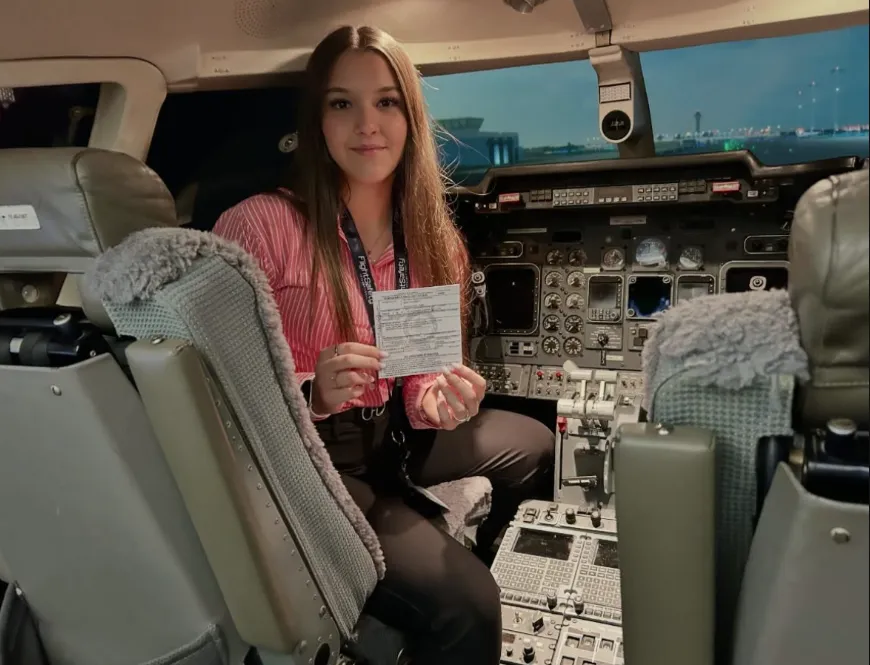
Among the victims was 20-year-old co-pilot Nathalia Gadelha Filgueiras, whose family later shared details about her final communication.
Who Was Co-Pilot Nathalia Gadelha Filgueiras?
Nathalia Gadelha Filgueiras had dreamed of becoming a pilot from an early age.
She earned her private pilot’s license at just 17 while attending high school in Florida.
Her achievement was particularly meaningful because she qualified to fly before obtaining her driver’s license.
According to her family, Nathalia had accumulated approximately 1,300 flight hours.
She had also been working professionally as a pilot for around nine months before the accident.
Despite her young age, aviation had already become a central part of her life.
Her mother, Camila Corteleti, told the New York Post that she supported her daughter’s ambitions despite worrying about the risks.
The family remembered Nathalia as someone determined to pursue the career she loved.
Tragically, her flight on November 1 would be her last.
Her Final Text Message to Her Boyfriend
One of the most heartbreaking details emerged when Nathalia’s stepfather, Thiago Corteleti, spoke with the New York Post.
According to Corteleti, Nathalia contacted her boyfriend, Justin, approximately 10 minutes before the crash.
Her message was short.
“I’ve got turbulence, I’ve got ice.”
Corteleti said the message was sent around 12:40 p.m., shortly before the aircraft crashed.
The reported text suggests Nathalia was aware of difficult flying conditions.
However, the message has been publicly described through her stepfather’s account. Its contents have not been independently authenticated.
The family’s account also closely resembles concerns raised during the crew’s communications with air traffic controllers.
Those recordings have become an important part of the investigation.
What Did the Pilots Report Before the Crash?
Air traffic control recordings indicate that the Learjet crew encountered turbulence and ice during the flight.
The pilots discussed managing ice accumulation and reported moderate turbulence.
They also requested a different altitude in search of smoother conditions.
Such requests are not unusual when aircraft encounter uncomfortable or potentially hazardous weather.
However, the situation aboard the Learjet deteriorated rapidly.
The crew eventually declared an emergency while the aircraft was descending at an extremely high rate.
Reports indicate that the descent exceeded 20,000 feet per minute during the final moments.
The pilots also reported an overspeed condition.
An overspeed occurs when an aircraft exceeds an applicable speed limitation, potentially creating additional structural and handling risks.
The final radio transmissions reflected the urgency of the emergency.
Within moments, communication ended.
Investigators Discover Important Evidence
The National Transportation Safety Board (NTSB) is examining the circumstances surrounding the crash.
One significant development involves the aircraft’s tail.
Investigators recovered pieces of the Learjet’s elevator away from the main crash site.
The elevator is a movable control surface on the horizontal tail that helps control an aircraft’s pitch.
In other words, it helps pilots raise or lower the aircraft’s nose.
NTSB officials reported that the elevator had separated into multiple pieces before the aircraft struck the ground.
This discovery provides important evidence about the aircraft’s condition during its final descent.
However, investigators have not yet established what caused the separation.
They must determine whether weather, aerodynamic forces, structural problems, or other factors contributed to the accident.
The findings also raise questions about how much control the pilots retained during the emergency.
Could Ice and Turbulence Have Contributed?
Weather conditions are among the factors investigators are examining.
Aircraft icing occurs when supercooled water droplets freeze upon contact with exposed surfaces.
Ice accumulation can affect aerodynamic performance and increase drag.
In some circumstances, it can also interfere with an aircraft’s handling characteristics.
Turbulence presents a different challenge.
It can produce sudden changes in airflow and place additional loads on an aircraft.
Nevertheless, encountering ice or turbulence does not automatically mean an aircraft will lose control.
Modern aircraft operate under specific limitations and procedures designed to manage challenging weather conditions.
For this reason, investigators must evaluate the complete sequence of events.
They will examine available weather information, aircraft records, recovered components, and communications.
There is currently no final official determination that icing caused the crash.
Who Were the Other Victims?
The crash also claimed the lives of technology entrepreneur Adam Robinson and his wife, Helen Sharp.
Their two young children, Emma, 4, and Charlie, 2, were aboard the aircraft.
Family friends Rachael Reed and Charmi Fehr also died.
Another victim was Anita Maria Cetina, who helped care for the children and was remembered as an important part of the family.
The aircraft’s captain was identified as Jeff Gregory, 55, an experienced pilot from Pennsylvania.
Together with Nathalia Filgueiras, the two pilots and seven passengers accounted for all nine fatalities.
In a joint statement, the passengers’ families remembered their loved ones and thanked emergency responders.
They also requested privacy while grieving.
The loss has deeply affected relatives, friends, colleagues, and the communities connected to those aboard.
Crash Causes Extensive Damage Near Residential Area
The Learjet struck the ground near Military Trail and 10th Avenue North in Palm Beach County.
Footage from the surrounding area showed the aircraft’s final descent and the fire that followed the impact.
The crash left a significant crater and scattered debris across the area.
Nearby structures were damaged, and emergency personnel secured the scene.
Authorities also evacuated hundreds of residents from the surrounding community as a precaution.
Approximately 600 people were affected by the evacuation.
Despite the crash occurring near homes and a busy roadway, no deaths were reported on the ground.
Investigators subsequently began examining the wreckage and documenting the impact area.
The recovery of aircraft components away from the main site has become especially important to understanding the final moments.
What Happens Next in the Investigation?
The FAA and NTSB are investigating the accident.
Their work includes reviewing the aircraft’s maintenance history, flight information, weather conditions, and available air traffic control recordings.
Investigators will also examine the recovered elevator components to determine how and when they separated.
The investigation may help establish whether the aircraft experienced a structural failure, loss of control, or another sequence of events.
However, a complete explanation will require careful analysis.
A final NTSB report could take months or longer.
Until investigators publish their conclusions, any explanation of the crash’s cause remains preliminary.
Remembering a Young Pilot Who Followed Her Dream
For Nathalia’s family, the investigation is only one part of an overwhelming loss.
At 20 years old, she had already achieved a dream that began during her teenage years.
She had earned her pilot’s license, accumulated substantial flying experience, and started building a professional aviation career.
Her family described her passion for flying as an important part of who she was.
Now, her reported final message has become one of the most widely discussed details of the tragedy.
The words about turbulence and ice offer a glimpse into the difficult conditions the crew reported.
However, they do not explain everything that happened aboard the aircraft.
As investigators continue their work, the families of all nine victims are left mourning lives cut tragically short.
The findings may eventually explain what caused the Learjet to crash.
For now, the focus remains on remembering those who died and establishing the facts behind the disaster.
Related Articles

My Mother Excluded My Kids from Christmas, Then Demanded $5,200—What Happened Next Shocked Me

Grandpa Discovered My Student Loan Money Paid for My Sister’s Wedding—Then He Made One Phone Call That Changed Everything

Woman Noticed Her Husband’s Wedding Ring Was Missing at His Funeral – A Week Later, She Saw It on a Stranger’s Hand