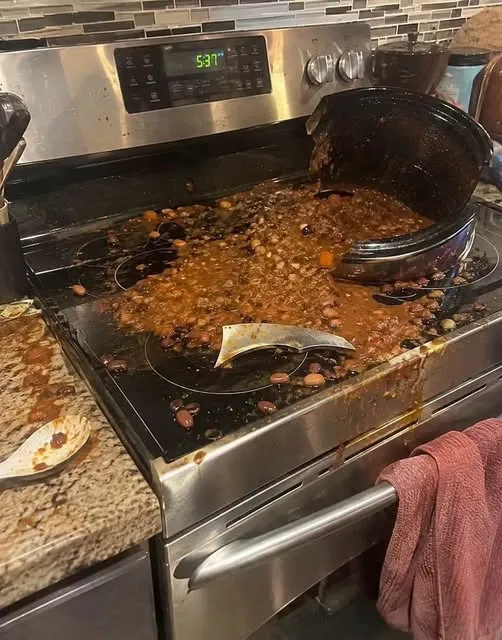
It looks sturdy, feels heavy, and handles hours of cooking without a problem. But one simple kitchen shortcut could cause your slow cooker insert to crack, sending hot food spilling across your stovetop. Here’s what every home cook should know before making this potentially dangerous mistake.
A Simple Cooking Shortcut That Could End in Disaster
Imagine preparing a comforting family dinner after a long day. The ingredients are ready, the slow cooker is on the counter, and everything seems to be going according to plan.
Then you decide to save a few minutes.
Instead of grabbing another pan to brown the meat, you remove the ceramic insert from your slow cooker and place it directly on the stovetop.
After all, it looks like a regular cooking pot. It’s thick, heavy, and designed to withstand heat for hours.
What could possibly go wrong?
Unfortunately, the answer might surprise you.
Within minutes, the ceramic insert could develop a crack. In some circumstances, it may even break apart, spilling hot food across the cooking surface.
And the most frightening part?
The damage can happen even when the insert looks perfectly fine before heating.
Why Slow Cooker Inserts Aren’t Always Safe on the Stove
The problem isn’t necessarily poor-quality cookware. It comes down to how traditional slow cookers are designed.
Most conventional slow cookers contain a removable ceramic or stoneware insert surrounded by an electric heating base.
Together, these components provide the gradual, controlled heat needed to prepare soups, stews, roasts, and other slow-cooked meals.
However, a stovetop burner works differently.
Rather than warming the insert through its intended heating system, the burner concentrates intense heat on a relatively small area.
As a result, one section of the ceramic can become significantly hotter than the surrounding material.
This uneven heating creates stress inside the insert.
And when that stress becomes too great, the ceramic may crack.
Experts call this phenomenon thermal shock.
What Is Thermal Shock, and Why Is It Dangerous?
Thermal shock occurs when different parts of a material experience rapid or uneven temperature changes.
Ceramic cookware can be particularly vulnerable because it does not always distribute heat quickly enough to prevent internal temperature differences.
For example, imagine placing a cool ceramic slow cooker insert onto a hot burner.
The bottom begins heating rapidly, while the sides remain much cooler.
Consequently, the material expands unevenly.
If the resulting stress exceeds what the ceramic can tolerate, cracks may develop.
Sometimes, these cracks are small and difficult to notice.
In more severe cases, the insert may fracture suddenly.
That means a pot filled with hot liquid, meat, and vegetables could potentially break while someone is standing nearby.
The consequences can extend beyond a ruined dinner.
Hot food may cause burns, while broken ceramic can create sharp fragments and additional cleanup hazards.
The Mistake That Makes This Risk So Easy to Overlook
One reason people make this mistake is surprisingly understandable.
Slow cooker inserts often resemble traditional casserole dishes or heavy cooking pots.
Some even feature glossy finishes and thick walls that make them appear exceptionally durable.
However, appearance alone cannot determine whether cookware is suitable for direct heat.
A ceramic insert might withstand hours inside its slow cooker while remaining completely unsuitable for a gas or electric burner.
Furthermore, being oven-safe does not automatically mean something is stovetop-safe.
These cooking methods expose cookware to heat differently.
Therefore, the safest approach is to check the manufacturer’s instructions before using the insert outside its intended appliance.
If the manual does not explicitly approve stovetop use, avoid placing the insert on a burner.
But Some Slow Cooker Inserts Can Go on the Stovetop
Here’s an important detail many people miss.
Not every removable slow cooker insert has the same limitations.
Certain modern appliances feature specially designed metal inserts that manufacturers approve for stovetop searing.
These models allow users to brown ingredients before beginning the slow-cooking process.
However, that feature must be confirmed for the exact appliance.
A removable insert does not automatically mean it is suitable for stovetop cooking.
Likewise, a heavy ceramic appearance is not evidence of heat resistance.
The manufacturer’s instructions, rather than the insert’s appearance, should determine how you use it.
When in doubt, use a separate frying pan.
Why Browning Meat in a Separate Pan Is Worth the Extra Effort
Many slow cooker recipes recommend browning meat before adding it to the pot.
This step isn’t always necessary for cooking the meat safely, but it can improve flavor and texture.
When meat touches a sufficiently hot cooking surface, chemical reactions create the rich browned flavors associated with roasting and searing.
This process is known as the Maillard reaction.
Slow cookers generally operate at temperatures and moisture levels that make effective browning difficult.
Therefore, a regular skillet is usually the better tool for this step.
Heat the skillet, brown the meat as directed by your recipe, and transfer everything into the slow cooker.
You can also sauté onions, garlic, or other vegetables before adding them.
As a result, you get the flavor benefits of browning without exposing an unsuitable ceramic insert to direct burner heat.
What Should You Do If You Accidentally Put the Insert on a Burner?
If you realize that you’ve placed an ordinary ceramic slow cooker insert on a hot burner, avoid making the situation worse.
First, turn off the heat.
Do not immediately grab the insert or attempt to cool it with water.
Sudden cooling can create additional thermal stress, potentially worsening existing cracks.
Instead, allow the cookware to cool naturally.
Once it has cooled completely, inspect it carefully for visible damage.
Look for cracks, chips, or any signs that the ceramic has separated.
If the insert is cracked or broken, stop using it.
Even a small crack can compromise the cookware’s integrity.
Additionally, check the manufacturer’s instructions for replacement options.
Never assume that a damaged ceramic insert is safe simply because it still holds liquid.
Another Common Mistake: Adding Cold Water to Hot Ceramic
Direct burner heat isn’t the only situation that deserves caution.
Rapid temperature changes can also occur when cold liquid comes into contact with very hot ceramic.
For example, someone might finish cooking and immediately pour cold water into the hot insert to make cleaning easier.
Although the intention is harmless, the sudden temperature difference may stress the material.
Similarly, moving a hot insert onto an unsuitable cold or wet surface may create problems, depending on its design.
To reduce these risks, follow the manufacturer’s handling and cleaning instructions.
Allow hot stoneware to cool appropriately before washing it.
And avoid exposing ceramic cookware to abrupt temperature changes unless its manufacturer specifically permits that use.
The Warning Signs You Should Never Ignore
A slow cooker insert may show signs of damage before a more serious failure occurs.
Small cracks, chips, or unusual changes in the ceramic surface deserve attention.
However, not every defect is immediately visible.
That is why checking cookware before use is a sensible habit.
If you discover a crack, discontinue use rather than trying to repair the insert with ordinary household adhesives.
Most household glues are not designed for prolonged food contact or the temperatures involved in cooking.
Replacing damaged cookware is generally safer than attempting a homemade repair.
Furthermore, never operate a slow cooker with a visibly damaged electrical heating base.
The insert and base must both remain in suitable condition for the appliance to function safely.
Why One Viral Kitchen Story Should Make Home Cooks Think Twice
Stories about slow cooker inserts breaking on stovetops often attract attention because the situation seems so unexpected.
A pot that handles hours of cooking might appear unlikely to fail after just a short time on a burner.
Yet that apparent contradiction is exactly what makes the warning important.
The issue is not simply how hot the cookware becomes.
It’s also how quickly and unevenly that heat reaches different parts of the material.
However, when a broken insert appears in a photograph or social media post, the exact cause cannot always be established.
Previous damage, the insert’s construction, and the heat source may all be relevant.
Without knowing the appliance model and circumstances, no one can reliably determine why a particular insert failed.
Still, the broader safety lesson remains valuable.
Cookware should only be used with heating methods its manufacturer has approved.
The Simple Kitchen Habit That Could Prevent a Serious Accident
Slow cookers have earned their place in millions of kitchens for good reason.
They make meal preparation convenient, allow ingredients to cook gradually, and help families enjoy homemade dinners with less hands-on work.
However, convenience should never come at the expense of safety.
The next time a recipe calls for browning meat before slow cooking, resist the temptation to place an ordinary ceramic insert directly on the burner.
Instead, spend a few extra minutes using a suitable skillet.
Then transfer the ingredients into the slow cooker and continue preparing your meal.
It’s a small adjustment that can prevent unnecessary damage and reduce the risk of injury.
One Final Detail Worth Remembering
Before trying an unfamiliar cooking shortcut, take a moment to read the instructions for your appliance.
An insert that is safe in the oven may not be safe on the stove. Another model may have entirely different capabilities.
And if the cookware has already developed a crack, don’t gamble on using it one more time.
Because sometimes, the difference between a delicious family dinner and a dangerous kitchen accident comes down to one simple decision: knowing where your cookware belongs.
Related Articles

My husband had a vasectomy yet two months later I got pregnant[s]

My Family Mocked Me for Being Poor at the Auction—Then I Bought the $12.5 Million Estate They Thought Was Theirs

Woman Loses 160 Pounds to Climb Her Late Son’s Dream Mountain – At the Summit, His Twin Pulls Out a Note Revealing the Truth!