The first time Henry broke my heart, he was standing three feet away from me in a church.
Years later, the second time, he wasn’t even in the room.
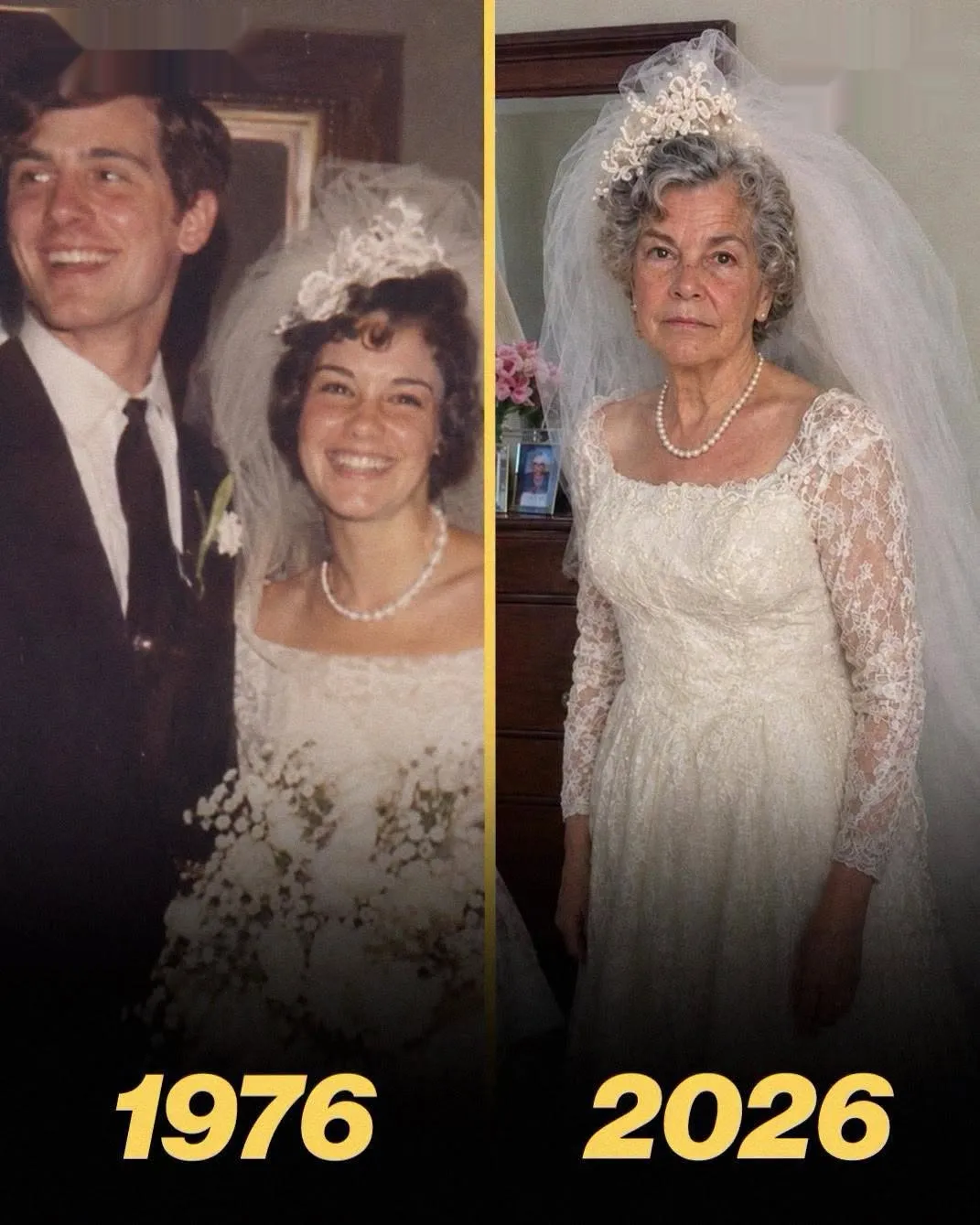
I was 22 when he shouted “I don’t!” in front of 80 people and ran out of our wedding.
Then, fifty years later, a young attorney appeared at my front door carrying a box that explained why.
An Unexpected Visitor at My Door
At first, I wouldn’t let him inside.
“My name is Daniel,” he said. “I represent Henry. He’s very ill, and he asked me to deliver this personally.”
“Then tell him I have nothing to say.”
“I understand. But there’s something in this box you deserve to see.”
Meanwhile, I was still holding a dish towel.
I’d been baking cookies for my grandchildren, and the kitchen timer was still ticking behind me.
“Why now?”
Instead of answering immediately, Daniel glanced at the box.
“Because he’s afraid he’ll die before you know what happened.”
For a moment, I almost closed the door.
Instead, I stepped aside.
A moment later, we sat at my kitchen table.
Daniel put the box between us, but he didn’t try to open it himself.
“Henry told me you might ask me to leave. If you do, I will.”
“Are you related to him?”
“I’m his nephew. I’m also the attorney helping him settle his affairs.”
That explained the emotion in his voice. However, it didn’t explain why a 50-year-old humiliation had arrived beside my cooling cookies.
The Letter Inside the Box
I lifted the lid.
Inside, I found a yellowed wedding invitation, several photographs, and a thin envelope with my name written across the front.
I knew that handwriting.
Or, at least, I thought I did.
It looked like the careful script I used when I was young, back when I wrote long letters instead of making telephone calls.
I unfolded the page.
“Henry, I need to be honest before we make a mistake.”
“I don’t love you the way you love me.”
“I’m marrying you because I need security, and because your family can give me the kind of life mine never could.”
My mouth went dry.
Then the letter continued.
“Please don’t expect me to become some devoted wife after the ceremony.”
“I’m grateful for what you can provide, but this marriage is about necessity, not love.”
“I hope you’ll be sensible enough to accept that.”
At the bottom was my name.
“Margaret.”
“Where did you get this?” I asked.
“Henry kept it.”
“I never wrote it.”
Daniel nodded. “He knows.”
Still, I read the page again.
The loops in the letters resembled mine.
Even the way the writer crossed the t’s looked familiar.
However, I had never said those things.
I’d loved Henry since we were teenagers.
I loved him when he drove an old truck with a broken heater.
I loved him when he worked late shifts at his father’s store.
I loved him when he saved for months to buy the ring I wore until the day he left.
His family had money. By contrast, mine didn’t.
Although people noticed the difference, Henry had never made me feel poor.
Or so I’d believed.
Finally, I folded the letter with shaking hands.
When Henry and I Fell in Love
I had met Henry when I was 16.
He was the boy who waited outside the school library because he knew I’d stay until closing.
On winter evenings, he’d walk me home, even when it meant going two miles out of his way.
His mother, Evelyn, never approved of us.
She invited me to supper exactly twice.
Each time, she asked about my father’s work and whether my mother planned to return to cleaning houses.
Once, while I helped clear dishes, she said, “Henry has always had expensive tastes. I wonder when he lost it.”
I smiled because I didn’t know what else to do.
Afterward, Henry apologized.
“She thinks she gets a vote in everything. She doesn’t.”
When he proposed, she told him we were too young.
Next, she suggested waiting until he finished taking over his father’s business.
Henry refused.
The Wedding We Had Planned
We chose a spring wedding.
I sewed my dress with help from my mother, who stayed up late pinning the hem while I practiced walking across our tiny living room.
On the morning of the ceremony, however, I could barely eat.
My father straightened my veil outside the church.
“Ready?” he asked.
“I’ve been ready for years.”
Henry stood at the altar in a dark suit. When he saw me, his eyes filled.
Even afterward, that was the detail I never understood.
He looked like a man who wanted to marry me.
Then the minister asked him to take me as his wife.
Henry stared at me.
Then his face hardened.
“I don’t!” he said.
The words rang through the church.
“Henry?”
He stepped back, turned, and hurried down the aisle.
Immediately, someone gasped. My mother called his name.
I heard a chair scrape against the floor.
The Day I Was Left at the Altar
I stood there holding my bouquet while 80 people watched.
At first, I still thought he’d come back.
Perhaps he’d been ill or frightened.
Surely he’d explain.
Nevertheless, I waited in the church until the guests left.
Then I sat outside on the steps, my dress dragging across the stone.
By sunset, my father carried me to the car because I couldn’t stop crying.
Afterward, people spent weeks asking what I’d done.
For example, one woman suggested Henry had discovered I was pregnant by another man.
My aunt Ruth chimed in, too.
“Men don’t run from a happy wedding for no reason, Margaret.”
However, I didn’t know the reason either, and I wanted to scream.
Evelyn never contacted me.
Henry never contacted me either.
Building a Life After Heartbreak
Six months later, I moved to Chicago with two suitcases and $27 saved from part-time work.
There, I found a job at a diner and rented a room above a grocery store.
Even then, some nights I cried into my pillow so my landlady wouldn’t hear.
The Man Who Helped Me Trust Again
Then I met Robert.
Every Thursday, he came to the diner and ordered coffee and pie.
When I finally agreed to dinner, he asked more questions about books than about my past.
Eventually, after we’d dated several months, I told him the wedding story.
He listened without interrupting.
“Do you still love him?”
“I don’t know. I don’t think I even know who he was.”
Robert nodded. “Then we can take our time.”
We did.
Moreover, he never pressured me to trust him quickly.
Later, we married in a small ceremony with 20 people.
We raised three children.
We argued over bills, celebrated graduations, cared for aging parents, and learned how to forgive each other for ordinary mistakes.
Sadly, he died four years ago.
Even now, I sometimes set two cups on the counter before remembering.
The Questions I Asked Daniel
Daniel waited while I stared at the forged letter.
“Henry’s mother gave it to him on the morning of the wedding,” he said.
“She said I’d written it?”
“Yes. She claimed you’d left it at their house the night before.”
Immediately, I pictured Evelyn’s composed face and pearl earrings. She always spoke as if every word settled an argument.
“Why would he believe her?”
“She showed him the envelope. She said she’d found it tucked inside a book you’d borrowed.”
“That’s ridiculous. I was at home all evening, finishing my dress.”
“Henry knows that now.”
The Papers Hidden in a Locked Desk
Next, Daniel removed another folder from the box.
“Evelyn died 12 years ago. While Henry was sorting her belongings, he found these in the bottom of a locked desk.”
The folder held three sheets of lined paper.
Each page, in fact, was an attempt to imitate my handwriting.
One page copied the words, “I love you, Henry,” several times.
Another contained a list of details:
“Margaret rounds her capital M. She uses a long tail on the y. She leaves little space after commas.”
Finally, the last page held an early draft of the letter.
It began, “Henry, I have been deceiving you.”
Moreover, whole sentences had been crossed out and rewritten in a colder, more polished style.
I felt sick.
“She practiced?”
“For some time, apparently.”
“She sat at a desk and practiced writing like me so she could destroy our relationship?”
Daniel, however, didn’t answer.
He didn’t need to.
Meanwhile, my chest tightened as things began to fall into place.
Old Memories Take on New Meaning
I remembered how aunt Ruth had always spoken admiringly of Henry’s family.
She was close with Evelyn’s sister, whom she visited often.
After the wedding, in fact, Ruth had been the first to suggest I’d done something shameful.
“Did my aunt Ruth know?” I asked.
Daniel shook his head.
“I haven’t seen evidence of that.”
“I don’t have proof either. But she kept telling me Henry’s family was too good for ours. And she was always visiting his aunt.”
Ruth had died years ago.
Of course, I couldn’t ask her now.
Still, certain memories looked different.
Her questions about my plans, her warnings not to become too ambitious, the way she’d seemed unsurprised when Henry fled.
Finally, I set the photograph down.
“Did his mother confess?”
“No. Henry found the drafts after she died.”
“How convenient.”
“He asked a handwriting specialist to examine the drafts alongside the letter. The specialist concluded the same writer had produced the drafts and the final version.”
“Henry’s mother attempted to imitate my writing.”
“He recognized her handwriting in the notes. She’d also kept the stationery in her desk.”
Why Had Henry Waited So Long?
I asked the question I’d been avoiding.
“When did he find all this?”
“Twelve years ago.”
Back then, Robert had still been alive.
Meanwhile, our youngest child had just bought a house.
My grandchildren were so young.
Yet Henry had known the truth through all of it.
“He found out 12 years ago and didn’t tell me?”
“He wanted to.”
“That’s not what I asked.”
Daniel looked down.
“No. He didn’t tell you.”
I felt a familiar anger rising, but it wasn’t the helpless anger I’d felt at 22.
This time, however, I knew what had happened.
I knew who’d written the letter.
Yet Henry had decided, once again, that I didn’t deserve to know until now.
A Decision Henry Made Years Earlier
Daniel explained that Henry hired someone to locate me after discovering the forgery.
Eventually, the investigator found a public photograph of Robert and me at our 30th wedding anniversary celebration.
In that photograph, Henry saw us surrounded by our children.
He told Daniel he couldn’t bear to interfere.
“Interfere?” I repeated. “By telling me I hadn’t done something terrible?”
“He thought contacting you might cause pain.”
“It would have. But keeping quiet was still his choice.”
Daniel nodded.
“He asked me not to defend that decision.”
Instead, I looked toward the mantel.
Robert’s photograph stood beside a small clay bowl our granddaughter had made.
After all, my life was here, in this kitchen, in the house where our children learned to walk.
I didn’t want any of it erased by a letter.
“This is the 50th anniversary of when he left me at the altar. Why now?” I asked.
“Henry remembered the date. He’s being treated for advanced heart failure, and his doctors have told him his condition is worsening.”
Still, I folded my arms.
“He wanted you to have the truth while he could still answer your questions.”
“Does he expect me to visit?”
“He hopes you will. But he told me to respect whatever you decide.”
For a long time, I said nothing.
Then I asked Daniel to leave the box.
A Family Evening and an Unanswered Question
That evening, my daughter Laura arrived with her children.
Soon, the kitchen filled with noise as they decorated the cookies I’d baked.
I helped my youngest grandson decorate a star with more icing than any cookie needed.
However, I didn’t mention Henry.
Later, after everyone left, I took out the original wedding invitation.
For 50 years, I’d kept it in a drawer, although I rarely looked at it.
“Margaret and Henry request the pleasure of your company.”
I placed the forged letter beside it.
Although the handwriting looked painfully close to mine, the words sounded nothing like the girl I’d been.
My Decision to Speak With Henry
Two days later, I called Daniel.
“I’d like to speak to Henry.”
Afterward, he arranged a visit at the care facility where Henry had moved following a recent hospital stay.
Then I drove myself.
Seeing Him After Fifty Years
When I entered his room, I almost didn’t recognize him.
His hair was white, his shoulders narrow.
An oxygen tube rested beneath his nose.
However, when he looked up, I recognized his eyes.
“Margaret.”
“Hello, Henry.”
He reached toward a chair.
“Please sit.”
I sat across from him.
At first, neither of us spoke.
Then he said, “I know you got the box.”
“I did.”
“I’m sorry.”
“For which part?”
For a moment, he looked startled.
“All of it.”
“That covers quite a lot.”
Then he lowered his eyes.
The Conversation We Never Had
I asked why he’d believed the letter.
“My mother told me you were ashamed to marry me,” he said. “She claimed you’d been laughing with your friends about how foolish I was to believe you loved me.”
“Did you ask any of those friends?”
“No.”
“Did you ask me?”
“No.”
“Why?”
Meanwhile, his fingers tightened around the blanket.
“I was angry. I felt foolish. I thought you’d been pretending to love me.”
“So you decided to humiliate me in front of everyone.”
He nodded.
“I wanted you to feel what I thought you’d done to me.”
Even so, hearing him admit it hurt more than I expected.
For years, I’d searched for a reason.
One that might make me understand what he did.
Instead, I found a young man who had chosen revenge over a conversation.
“Your mother lied to you,” I said. “I understand that. But she wasn’t the person standing at the altar with me.”
“I know.”
“Then why didn’t you tell me the truth years ago?”
Instead, he looked toward the window.
“After the investigator found a picture of you and Robert, I couldn’t. You looked happy. I thought you’d finally put me behind you.”
“I had. Most days.”
“I couldn’t bear the thought of hurting you again.”
“You were afraid I’d be angry.”
“Yes.”
“And you were afraid I’d refuse to forgive you.”
Then his eyes filled.
“Yes.”
I leaned forward.
“Henry, you didn’t protect me by staying away. You protected yourself from hearing what I had to say.”
He nodded slowly.
“You’re right.”
I had expected him to argue. Instead, he sat with the words.
The Lives We Lived Apart
After a while, he asked about Robert.
I told him my husband had been kind, stubborn, and loving.
Then I told him we had three children and six grandchildren.
Henry smiled faintly.
“I’m glad someone loved you well.”
“He did.”
Afterward, he looked at his hands.
“I never got married.”
Although I felt a brief ache for the young man I’d known, it didn’t change what I wanted.
“Henry, I didn’t come here to find out whether we could have had another life.”
“I know.”
“I came because I wanted to hear directly from you what happened.”
He took a careful breath.
“My mother forged that letter. I believed her. I chose to embarrass you in church. When I learned the truth, I was too afraid to face you. I’m sorry, Margaret.”
For a while, I sat quietly.
Finally, I stood.
“I forgive you for believing someone you trusted. But I can’t excuse what you did afterward, or the years you let me blame myself.”
He nodded.
“I understand.”
“I don’t have the energy to reopen the past. I have a family and a life I love. I won’t be coming back.”
Then a tear slipped down his cheek.
“Thank you for coming once.”
At the door, I turned.
“I hope you’re comfortable, Henry. And I hope you’re at peace.”
“You too.”
Returning Home to the Life I Chose
I drove home before sunset.
Back in the kitchen, I took the forged letter from my purse and laid it beside the wedding invitation.
For 50 years, I’d looked at that invitation and remembered a question left unanswered.
Finally, I knew the answer.
Then I put both papers into the old cardboard box and closed the lid.
Then I called Laura.
“Are you still bringing the children over Sunday?” I asked.
“Of course. Why?”
“I thought I’d make Robert’s favorite cookies.”
She laughed.
“Mom, you make those every Sunday.”
“I know. Tell the kids to come hungry.”
Related Articles
My Husband Bought a $68,000 Truck With My Inheritance—Without Asking Me
I Stopped a Man Carrying a Terrified Little Girl—Then He Sued Me for $250,000
After Six Years Without a Proposal, I Was Ready to Leave My Boyfriend—Then I Overheard His Secret