
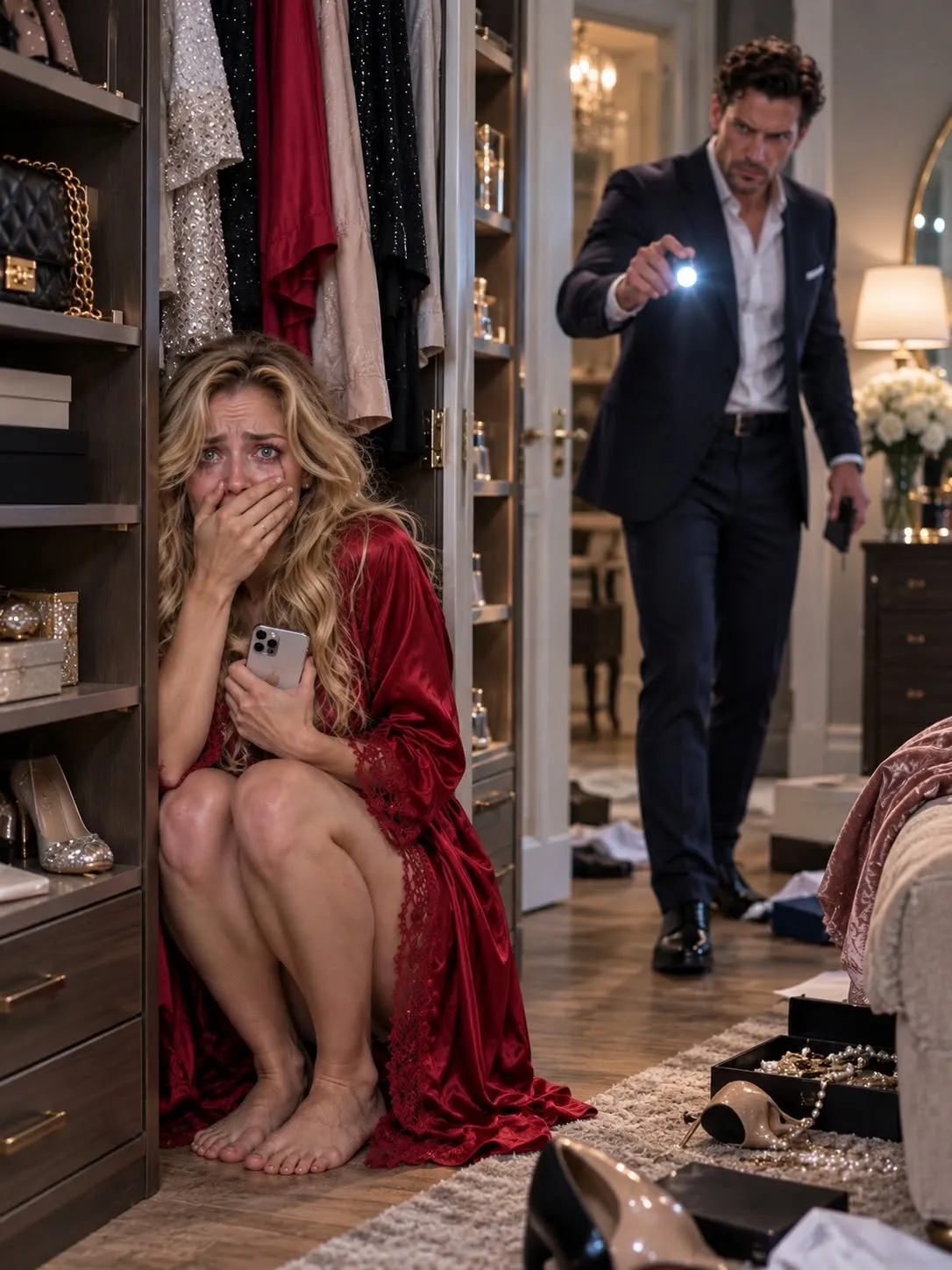
At 2:13 in the morning, my fourteen-year-old son called me and said something no mother expects to hear.
“Mom, turn off the main power.”
Immediately, I sat up so quickly that I knocked my phone charger onto the floor.
“Toby?”
His breathing was uneven.
“Go downstairs. Shut everything off. Then hide.”
I reached instinctively for the lamp beside my bed.
“Where are you?”
“At Noah’s house. I’m okay.”
“Then what happened?”
He went silent for half a second.
When he spoke again, his voice had dropped to a whisper.
“Whatever you do, don’t trust Dad.”
Then I stared at Christopher’s empty side of the bed.
Forty minutes earlier, my husband had texted that a late investor meeting had turned into a disaster and that he would probably be stuck at the office until morning.
By then, we had been married for fourteen years.
Christopher had missed dinners. He had canceled vacations. He had once spent Christmas Eve answering emails from a hotel lobby because one of his developments was behind schedule.
Still, I had never heard my son sound afraid of him.
“Toby, tell me exactly what you saw.”
“Mom, please. Do it first.”
Even so, that was enough.
Without another question, I got out of bed.
The House Went Dark
The house had belonged to my father before it belonged to me.
He built it in the late nineties on a wooded street outside Cleveland, back when the neighborhood still had empty lots and people complained that everything was too far from downtown.
My father was an engineer who trusted measurements more than people.
He checked foundations himself. When the wiring didn’t meet his standards, he argued until it was corrected. Once, he even made contractors rebuild part of a staircase because one riser was slightly taller than the others.
Christopher used to tease him about it.
My father never seemed bothered.
Eventually, when he died, the house passed to me.
That mattered later.
However, at 2:15 that morning, it mattered for another reason.
There was something about the house Christopher didn’t know.
Behind the built-in walnut shelves in my father’s old study was a narrow storage room.
Nothing dramatic. My father had designed it for documents, emergency supplies and valuables.
The panel opened when you pressed beneath the third shelf.
Christopher had lived in the house for thirteen years and had never discovered it.
The Hidden Room
So I hurried downstairs and pulled the main breaker.
The house went black.
Immediately, the refrigerator stopped humming.
Outside, the security lights disappeared.
For a moment, I stood in the darkness and listened.
Then I heard it.
The back door.
My skin went cold.
I crossed the hallway, pressed the hidden latch beneath the shelf and slipped behind the panel.
Then the door closed silently behind me.
The small room smelled faintly of old paper and cedar.
Although my father’s emergency flashlight was still sitting on a shelf, I didn’t touch it.
I dimmed my phone screen until it was barely visible.
A few minutes later, at 2:21, footsteps moved across the kitchen.
Slowly.
Deliberately.
A narrow flashlight beam swept across the hallway outside.
Then Christopher walked past.
Through the slim gap beside the panel, I could see him.
Dark pants.
Black jacket.
Gloves.
No briefcase.
No laptop bag.
He was supposed to be downtown in a conference room.
Instead, my husband was moving through our darkened house as though he didn’t want anyone to know he was there.
Then he went upstairs.
A drawer opened.
Then another.
I heard the closet door slide.
The Searches on the Family Laptop
Then my phone vibrated.
Toby had sent screenshots.
I opened the first.
They were searches from our family browser history.
how long after life insurance starts can beneficiary collect
The next:
accidental death during sleep investigation
Then:
sedatives standard toxicology screen
And finally:
can death from medication look natural
I had to read the last one twice.
Before I could process it, a floorboard creaked upstairs.
By then, Christopher was coming back down.
Christopher Came Back Down
I turned my phone facedown.
His flashlight entered the study.
The beam moved across the rug, then across the desk and finally over the bookshelves.
Then it stopped.
I could see part of his face through the narrow opening.
However, his expression was calm.
That frightened me more than panic would have.
He wasn’t calling my name like a worried husband who had arrived home to find the house dark.
He was searching.
Systematically.
The beam lowered toward his hand.
Then something reflected the light.
A syringe.
Clear liquid inside.
Christopher was standing less than six feet from me.
Then he spoke quietly.
“Gwen?”
I pressed my palm against my mouth.
“Honey?”
Nothing.
He waited.
So did I.
Eventually, the beam disappeared.
A few minutes later, I heard the back door close.
After He Left
Even after the door closed, I stayed behind the shelves for another twenty minutes.
Only then did I call Toby.
“Start from the beginning.”
By then, he was crying.
He told me he had been at Noah’s house using our family laptop because he couldn’t find his charger. When he opened the browser, Christopher’s profile was still logged in.
At first, Toby assumed the searches had something to do with work.
After all, Christopher ran a commercial development company. Contracts, liability and insurance were part of his life.
Then Toby saw my name.
spouse life insurance claim investigation
Another search followed.
how long does beneficiary wait if spouse death unexpected
“I didn’t know what else to do,” Toby said.
“You did exactly the right thing.”
He sniffed.
“Was that Dad in the house?”
I looked through the narrow gap toward the empty study.
“Yes.”
He went silent.
Then:
“Why?”
I didn’t have an answer.
So I gave him the only instruction I trusted.
“Stay at Noah’s. Don’t text your father. Don’t mention the searches.”
“Are you calling the police?”
I looked at the closed panel.
“I’m calling Dean first.”
Dean Mercer had handled security for my father’s firm for almost twenty years.
He wasn’t family, but he was close enough that Toby had called him Uncle Dean when he was little.
Fortunately, Dean answered on the second ring.
Then I told him everything.
Instead, he listened without interrupting once.
When I finished, he said:
“Don’t clean anything. Don’t move anything. And don’t confront Christopher.”
That last instruction was unnecessary.
I had no intention of confronting my husband.
Not yet.
At Breakfast, He Lied Without Blinking
Christopher came through the front door at 7:40 that morning wearing a charcoal suit and carrying two coffees and a bakery bag.
Then he kissed my forehead.
“You look exhausted.”
I was sitting at the kitchen island.
I had showered, changed clothes and put on makeup because I needed him to see exactly the same wife he had left the night before.
“Didn’t sleep much.”
He placed a blueberry muffin beside me.
“Power outage?”
“Apparently.”
Then he removed his jacket.
“My phone died around three. Total nightmare downtown.”
I watched him add cream to his coffee.
“You stayed at the office all night?”
“Unfortunately.”
After that, he took a sip.
Then he looked at me.
“Why?”
However, there was no hesitation.
No nervousness.
No sign that five hours earlier he had been walking through our bedroom wearing gloves.
I folded the top of the bakery bag.
“Just asking.”
He smiled.
“I need a shower before I head back.”
That morning was the first time I knowingly allowed my husband to lie directly to my face.
And it was surprisingly easy.
By ten that morning, Dean had checked the security system.
Christopher had avoided our driveway camera completely.
But a neighbor’s camera had captured his SUV parking two streets away at 2:16.
However, another camera showed him walking toward our house.
At 2:49, the same camera recorded him returning to the vehicle.
Dean sent me the clips.
I watched them from my car in a grocery-store parking lot.
In one of the videos, Christopher glanced over his shoulder before crossing the street.
I paused the footage there.
That small movement bothered me more than almost anything else.
It meant he knew he wasn’t supposed to be seen.
Toby Came Home
Toby came home that afternoon and went directly upstairs.
Then Christopher called after him.
“Hey, buddy. Everything good?”
“Yeah.”
“How was Noah’s?”
“Fine.”
Later, at dinner, Toby barely spoke.
Christopher noticed.
“You sick?”
“No.”
“You look like you’re hiding something.”
Immediately, Toby’s fork stopped halfway to his mouth.
I answered before he could.
“He’s fourteen. That’s basically the job description.”
Christopher laughed.
Toby didn’t.
The Insurance Policies
Later that evening, Toby came into my office holding three large envelopes.
“I found these.”
I looked up.
“Where?”
“Dad’s filing cabinet.”
Normally, I should have told him not to go through Christopher’s things again.
Instead, I took the envelopes.
Three life-insurance policies.
One I already knew about.
Four million dollars.
The other two were new.
Ten million each.
Total coverage:
Twenty-four million dollars.
Beneficiary:
Christopher.
Then I sat down slowly.
Toby remained beside the desk.
“Is that normal?”
“Not for us.”
The two newer policies had been issued during the previous year.
One application listed Christopher’s business interests as justification for the coverage. Meanwhile, another referenced estate planning.
I remembered signing paperwork connected to insurance examinations.
However, I did not remember agreeing to twenty-four million dollars in coverage.
So I photographed every page.
Afterward, I returned everything exactly as Toby had found it.
He watched me carefully.
“What are we going to do?”
I closed the drawer.
“We’re going to stop guessing.”
The Numbers Didn’t Match the Life We Were Living
Christopher’s company looked successful.
That was part of his talent.
He wore expensive suits and leased impressive office space.
At investor dinners, he knew which wine to order and which person at the table needed to feel important.
Meanwhile, his company had projects in Ohio, Michigan and Georgia.
He talked constantly about expansion.
Then Dean introduced me to a financial investigator named Mara Benson.
However, I didn’t give her access to Christopher’s private accounts.
I gave her business documents connected to projects where my architecture firm had legitimate involvement.
That was enough.
Four days later, Mara called me.
“Your husband has a liquidity problem.”
“How bad?”
For a moment, there was a pause.
“Bad enough that I don’t think it’s temporary.”
She had identified roughly six million dollars in unexplained shortages, overdue obligations and transfers that appeared to move money from one project to cover losses in another.
Christopher wasn’t expanding.
Instead, he was buying time.
Beatrice Asked for the House
That same evening, Beatrice came to the house without calling.
Then my mother-in-law walked into the kitchen and set her purse on the counter.
“Is Christopher here?”
“Not yet.”
She looked relieved.
That surprised me.
She sat down.
“He needs your help.”
At first, I said nothing.
“The company has had a difficult quarter.”
“Christopher says business is excellent.”
Beatrice gave me an irritated look.
“You know what men are like. They don’t want their wives worrying.”
I almost laughed.
Then she continued.
“You have the house.”
I looked at her.
“What about it?”
“There’s a tremendous amount of equity.”
There it was.
My father’s house.
“What are you asking?”
“A refinance. Or a line of credit.”
“How much?”
For a moment, she hesitated.
“Four million would probably solve most of the immediate pressure.”
Then I turned toward the sink.
“No.”
“Gwen.”
“I’m not borrowing four million dollars against my father’s house.”
“For your husband?”
“For Christopher’s company.”
She leaned toward me.
“What’s the difference?”
I looked directly at her.
“A lot.”
Beatrice stood.
“Marriage is not supposed to be transactional.”
“Then Christopher shouldn’t need a four-million-dollar transaction from me.”
Her mouth tightened.
“Your father left you more than enough.”
I opened the kitchen door.
“And he left it to me.”
Eventually, she stared at me for several seconds before picking up her purse and leaving.
I didn’t tell her about the insurance policies or the search history.
Most importantly, I didn’t tell her that her son had entered my house at two in the morning carrying a syringe.
The next day, however, I called my attorney.
I made absolutely certain Christopher had no legal authority to borrow against the house.
That was my first real move.
Valerie Wasn’t Just an Affair
I discovered Valerie by accident.
A few days later, Christopher and I were driving home from lunch when he stopped for gas.
Then he went inside the station.
However, his phone remained connected to the car.
A message appeared on the dashboard.
Valerie: Doctor says baby looks perfect.
I stared at the screen.
Seconds later, another message appeared.
Tell me when you’ve handled Gwen.
Soon afterward, Christopher returned carrying a bottle of water.
I was looking out the passenger window.
“Everything okay?”
“Fine.”
Afterward, he drove home.
I said nothing.
Who Valerie Was
Dean identified Valerie Grant within two days.
She was thirty-three and had worked with Christopher on several Atlanta projects.
More importantly, she was pregnant, and Christopher had been paying some of her expenses.
At first, I thought discovering the affair would be the part that broke me.
It wasn’t.
Compared with everything else, the affair almost felt ordinary.
Instead, what mattered was what they were planning.
That Thursday evening, I followed Christopher to a restaurant outside downtown.
From the lounge, I watched while he and Valerie ate in a booth nearby. At first, I couldn’t hear most of their conversation.
Then Valerie said my name.
I switched on the recorder on my phone.
“She still won’t use the house?”
Christopher shook his head.
“She’s being difficult.”
“Then stop asking.”
“I have another route.”
Then Valerie lowered her voice.
“The doctor?”
“He’ll talk to her.”
“And if she says no?”
Christopher leaned back.
“People already know she hasn’t been herself.”
Immediately, my fingers tightened around the phone.
For a moment, Valerie stared at him.
“You haven’t started saying that, have you?”
“I’ve mentioned she’s been stressed.”
“Christopher.”
“What?”
“You’re making it sound like you’re building a story.”
Then he was quiet for a moment.
Then he said:
“If something happens later, nobody should be surprised.”
I stopped breathing.
Immediately, Valerie’s expression changed.
“That’s a terrible way to say it.”
“Then choose better words.”
He took a drink.
“The point is, she needs to look unstable before she becomes a problem.”
Eventually, I left before they did.
I Started Documenting Everything
Later that night, I sat inside the hidden room behind my father’s shelves again.
Not because Christopher was home.
Because I needed somewhere he couldn’t enter.
I called Dean.
“I want everything documented.”
“Already working on it.”
“No. Everything.”
For the first time since Toby’s phone call, my voice shook.
He Put a Psychiatrist’s Card Beside My Dinner Plate
After that, Christopher became kinder.
In some ways, that was almost worse.
He brought home flowers and offered to cook.
Then he started asking whether I was sleeping properly.
Then one evening, he placed a business card beside my dinner plate.
Dr. Nathan Bell
Psychiatry
I looked at it.
“What’s this?”
Christopher continued cutting his chicken.
“Someone Mark recommended.”
“For who?”
Eventually, he looked up.
“For you.”
Toby’s fork paused.
“Why would I need a psychiatrist?”
Christopher gave me a patient smile.
“Nobody said you need one.”
I tapped the card.
“You put a psychiatrist’s card beside my dinner.”
“You’ve been anxious. Distracted.”
“Have I?”
“Gwen.”
However, his tone shifted.
Not angry.
Concerned.
Reasonable.
Exactly the tone someone would use if other people were listening.
“You barely sleep. Sometimes you forget conversations, and lately you disappear into that office for hours.”
Meanwhile, Toby looked at me.
Then Christopher continued.
“The other night, during the outage, I couldn’t even find you.”
My hand stopped.
“You were at the office.”
For a fraction of a second, he froze.
Then Christopher recovered.
“I mean when I got home.”
“At seven forty?”
Finally, he put down his knife.
“Why are you doing this?”
“Doing what?”
“Turning everything into an interrogation.”
There it was.
So I picked up the business card.
“I’ll think about it.”
Immediately, his shoulders relaxed.
“That’s all I’m asking.”
The Drink Changed Everything
Two nights later, Christopher brought me a drink while I worked.
I waited until he went upstairs.
Then I poured some of it into a clean container Dean had provided.
Three days later, the laboratory report came back.
The sample contained a heavy concentration of a prescription sedative.
It wasn’t prescribed to me.
I sat in my car reading the report.
Then I called Dean.
“Take it in.”
“You sure?”
“Yes.”
By then, Dean had already been speaking with investigators.
Until then, the browser history alone wasn’t enough.
Neither were the insurance policies.
The drink changed everything.
My Signature Was on a Document I Had Never Seen
The following week, a woman named Chloe Mason contacted me.
She worked in accounting at Christopher’s company.
We met at a coffee shop twenty minutes from my office.
She arrived carrying a plain folder.
Her hands shook as she opened it.
“I think he’s going to fire me.”
“Why?”
“Because I stopped fixing things for him.”
Then she showed me transfers between company accounts.
Some appeared improper.
Others looked potentially fraudulent.
However, the document that mattered most to me was near the bottom.
It transferred rights connected to two projects from my architecture firm to another business.
My name appeared beneath the authorization.
Gwendolyn Hart.
My signature was underneath.
For several seconds, I stared at it.
“I didn’t sign this.”
Chloe nodded.
“I didn’t think you did.”
“Who uploaded it?”
“Christopher.”
“Witness?”
She pointed to the page.
Valerie Grant.
I leaned back in my chair.
Suddenly the pieces no longer looked separate.
The insurance policies, the money, the affair and the forged documents were all connected.
Christopher needed cash.
My assets could help him. So could my business interests and my house.
And if I were no longer there to object, twenty-four million dollars could help him most of all.
I looked at Chloe.
“Do you have copies of the original records?”
“Yes.”
“Keep them somewhere he can’t reach.”
She nodded.
“Already did.”
From that moment on, I stopped thinking of myself as a wife trying to understand her marriage.
I was protecting evidence.
Beatrice Had Already Given Him Four Million
Several days later, Beatrice called me one morning.
She sounded different.
No criticism.
No lecture.
Just tired.
“Did Christopher mention Atlanta?”
I sat down.
“Why?”
“I gave him money.”
I closed my laptop.
“How much?”
Silence.
“Beatrice.”
“Four million.”
So I drove to her house.
She showed me the loan documents.
She had borrowed against the home she had lived in for twenty-seven years.
Christopher had told her the money would stabilize the company.
Chloe’s records showed where much of it had gone: through Valerie, then toward Atlanta, including a penthouse.
I placed the papers back on Beatrice’s coffee table.
“You need to talk to a lawyer.”
She looked offended.
“Christopher would never steal from me.”
“Then ask him where your money went.”
Her expression changed.
“You know something.”
I met her eyes.
“Yes.”
“Tell me.”
I almost did.
Then I thought about the investor gala in Detroit.
Christopher had been planning it for months.
He was going to stand on a stage in front of hundreds of people and present himself as a man who had everything under control.
By then, investigators had the laboratory report, security footage, Chloe’s records and the insurance documents.
Meanwhile, I had been told not to interfere with their work.
However, there was still one thing Christopher controlled.
The story everyone around us believed.
So I decided to take that away from him.
“My Wife Hasn’t Been Herself”
Finally, the night of the Detroit gala arrived. It was held in a hotel ballroom filled with nearly three hundred guests.
Christopher wore a tuxedo.
Valerie wore a dark blue dress.
Her pregnancy was visible now.
Beatrice sat near the front.
Toby stayed home with Dean.
That part wasn’t negotiable.
Christopher spoke for almost twenty minutes.
He talked about resilience.
Growth.
New opportunities.
Then he smiled toward my table.
“Many of you know my wife, Gwen.”
I looked up.
This wasn’t in the program.
“She’s been part of our company’s story from the beginning.”
His expression softened.
“Unfortunately, Gwen has been dealing with some private health concerns.”
The room grew still.
“After conversations with people who care deeply about her, we’ve decided she will be stepping away from professional responsibilities for a while.”
We’ve decided.
I Took the Microphone
Immediately, I stood.
Christopher saw me.
His smile tightened.
“Gwen, sweetheart, you don’t have to—”
Without waiting, I walked toward the stage.
People moved aside.
When I reached him, Christopher covered the microphone with his hand.
“This isn’t the time.”
I looked at him.
“You just told three hundred people I’m mentally unwell.”
His jaw tightened.
“You’re emotional.”
“Give me the microphone.”
“Gwen.”
“Give it to me.”
He leaned closer.
“You’re proving my point.”
I reached for the microphone.
He finally let go.
The screen behind us still displayed his company logo.
I nodded toward the technician.
The image changed.
A timestamp appeared.
2:17 A.M.
Christopher’s SUV was shown parked two streets from our house.
Then another camera angle showed him walking toward the property.
The ballroom fell silent.
“My husband told me he was at work that night.”
Christopher reached toward me.
“Gwen, enough.”
I stepped back.
Next, the screen changed again.
Three insurance policies.
Twenty-four million dollars.
Christopher listed as sole beneficiary.
Whispers spread through the room.
“These policies were issued within the last year.”
Christopher’s face had gone pale.
“Those are private documents.”
“Yes.”
The next image appeared.
The laboratory report.
I kept my explanation simple.
“This substance was found in a drink Christopher prepared for me. It was not prescribed to me.”
Meanwhile, Valerie began moving toward the side exit.
Two investigators standing near the doors stepped forward.
She stopped.
Christopher noticed them.
For the first time that evening, he looked afraid.
The Recording
Then another recording played.
His voice filled the ballroom.
It was a conversation involving documents bearing my forged signature.
Valerie asked whether the signature would survive scrutiny.
Christopher answered:
“It doesn’t have to hold forever. Just long enough.”
Beatrice stood.
“Christopher?”
He didn’t look at her.
I did.
“There’s something you need to hear too.”
Her eyes fixed on mine.
“Your four million dollars didn’t save his company.”
Christopher turned sharply.
“Gwen.”
I continued.
“A large portion of it moved through accounts connected to Valerie.”
Beatrice looked at Valerie.
“What accounts?”
Valerie shook her head.
Christopher stepped forward.
“Mom, she doesn’t understand the financial structure.”
Beatrice grabbed his sleeve.
“Where is my money?”
“Not now.”
“I put my house up for you.”
Christopher pulled his arm away.
“I said not now.”
Suddenly, Valerie laughed.
It was a short, panicked sound.
“Don’t make this all my fault.”
Christopher turned toward her.
“Stop.”
She pointed at him.
“You said the insurance would fix everything.”
Silence.
Christopher froze.
Valerie realized what she had just said.
“I didn’t mean—”
“Stop talking.”
However, she didn’t.
“You told me once it paid out, the debt wouldn’t matter.”
Beatrice slowly sat down.
Someone near the back whispered something.
Christopher looked toward the doors.
The investigators were already walking toward us.
I Didn’t Sell the House
What Happened After the Gala
By the end of the evening, Christopher and Valerie had been arrested.
What followed took months.
Interviews.
Attorneys.
Financial audits.
Hearings.
Toby had nightmares.
I changed every lock in the house.
For weeks afterward, I checked the alarm twice before going to bed.
The forged transfers involving my company were eventually invalidated.
The house remained mine because Christopher had never owned it and had no authority to pledge it.
Christopher eventually faced charges related to financial fraud, forged documents and the evidence surrounding what investigators said he had been planning against me.
Valerie faced charges connected to her role in the financial scheme.
The evidence was complicated, but the pieces people remembered were simple: the insurance policies, the security footage, the drink, the forged signature, the recordings and Chloe’s records.
Beatrice was not charged.
Investigators found no evidence that she knew what Christopher had been planning.
Even so, she still lost her house.
The loan was real.
Christopher’s promises were not.
Beatrice Called Again
Three months later, she called me.
“I don’t know where I’m supposed to live.”
I was sitting in my father’s study.
“Dean found some housing resources. I’ll send them.”
She was quiet.
Then she said:
“Your father left you that huge house.”
I closed my eyes.
Same argument.
Different circumstances.
“Yes.”
“You could help me.”
“I am helping you.”
“You know what I mean.”
I looked at the walnut shelves.
“I’m not borrowing against this house.”
“I’m Toby’s grandmother.”
“And I’ll make sure you can have a relationship with him.”
She said nothing.
“But I’m not paying Christopher’s debt.”
Still, I sent her the housing information.
Six months later, Toby came home for summer break.
First, he noticed the new camera above the driveway.
Then he saw the keypad beside the front door.
Finally, his eyes moved toward my father’s study.
I had permanently moved my architecture work into it.
Toby had a desk beside mine.
Sometimes he built models there.
Sometimes he did homework.
One afternoon, I found him standing in front of the hidden panel.
“You ever think about sealing it up?”
“I did.”
“Why didn’t you?”
I walked toward him.
“Because it wasn’t the room that scared me.”
Toby pressed the latch.
The panel opened.
For months, I had remembered that narrow space as the place where I stood in darkness, listening while my husband searched for me.
Now afternoon sunlight stretched across my father’s study and reached almost to the hidden doorway.
Toby looked inside.
“Want me to close it?”
I shook my head.
“Leave it open.”