
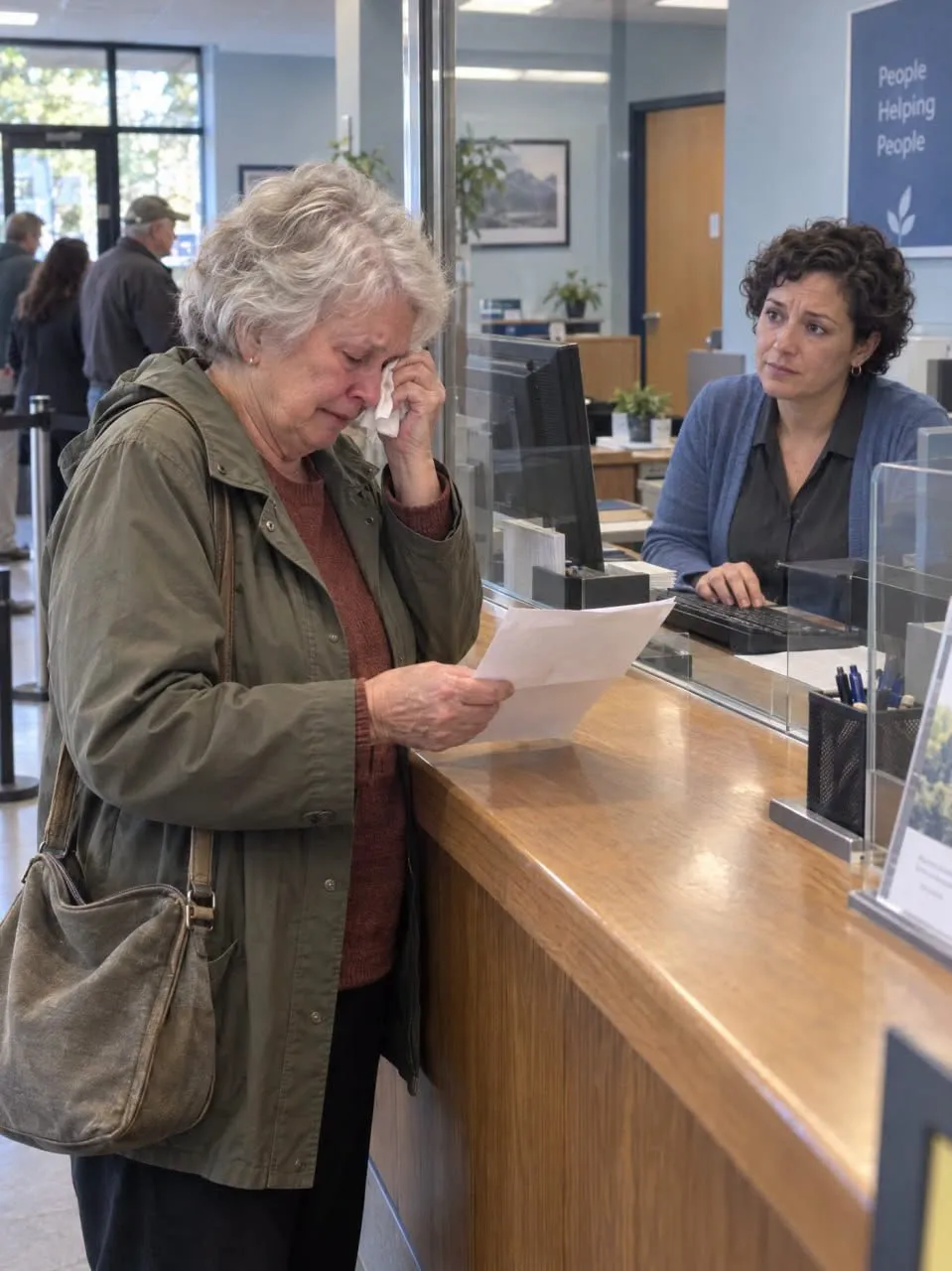
I am sixty-five years old.
Five years ago, after thirty-seven years of marriage, my husband walked out of my life and left me with a bank card containing $3,000.
I never spent a single dollar.
For five years, that card remained hidden inside an old box in my apartment.
Then one morning, after my doctor told me I could no longer postpone medical treatment, I finally swallowed my pride and walked into the bank.
I expected to withdraw $3,000.
Instead, the teller stared at her computer screen, called the branch manager, and told me something that made my entire body go still.
There wasn’t $3,000 in the account.
There was far more.
But to understand why, you have to understand what happened between Gregory and me.
Thirty-Seven Years Together
Gregory and I married in June 1982 inside a small brick church in Columbus.
Seventy-three people attended our wedding.
I was twenty-eight years old. Gregory was thirty.
We were young, hopeful, and completely convinced that the future was something we could build together.
“You look like an absolute dream in that dress, Shirley,” Gregory whispered as we stood at the altar.
I still remember the way he looked at me.
My mother had sewn my lace wedding dress herself using an old family pattern.
Gregory wore an oversized navy suit borrowed from his older brother. The sleeves were slightly too long, but his smile made me forget everything else.
That afternoon, I believed every promise he made.
For many years, I had no reason not to.
We eventually had three children.
Patricia, our oldest daughter, grew into a devoted mother herself and moved to Milwaukee.
David built a career in Omaha.
Karen, our youngest, remained the most emotionally attached to both of us.
For thirty-one years, Gregory and I lived in a modest two-story house on Maple Street.
It wasn’t luxurious.
But it was ours.
I knew which window caught the morning sunlight first. I knew which radiator hissed during cold winter nights. I even knew exactly how far to pull the front door toward me before the old key would turn.
Those small details became the rhythm of my life.
For nineteen years, I worked as a dental hygienist while raising our children and managing our home.
Meanwhile, Gregory built a logistics distribution company from the ground up.
His name was on the company paperwork.
But our family had built that life together.
While Gregory worked long hours, I raised the children, organized appointments, prepared dinners for clients, handled household responsibilities, and made sure he had the freedom to concentrate on growing the business.
I never kept score.
I thought that was what marriage meant.
Then, shortly after my sixtieth birthday, Gregory asked me to sit beside him in our living room.
I knew immediately that something was wrong.
He didn’t shout.
He didn’t accuse me of anything.
There was no dramatic confession about another woman.
He simply looked at me and said:
“I need something different from my life, Shirley.”
I stared at him.
“What does that mean?”
He rubbed his hands together.
“I can’t keep living like this.”
“Like what? Gregory, we’ve built a good life.”
He looked toward the window instead of at me.
“It feels like we’re just waiting for something to happen. I don’t want the rest of my life to feel that way.”
I remember sitting there in silence.
Thirty-seven years.
Three children.
A home.
Thousands of breakfasts, birthdays, arguments, Christmas mornings, hospital visits, school events, vacations and ordinary Tuesday evenings.
And suddenly, none of it seemed enough to make him stay.
The Divorce
Our divorce took eleven exhausting months.
By the end, I was emotionally drained.
The house was sold.
Our property and savings were divided.
Gregory’s business interests were protected through arrangements that I did not have the money or energy to challenge.
My children urged me to fight harder.
But I couldn’t.
I wanted it finished.
On the day the divorce became official, Gregory and I stood in a courthouse hallway in Minneapolis.
Neither of us knew what to say.
Finally, Gregory reached into his coat pocket and handed me a bank card.
“Take it,” he said.
I looked at it without moving.
“What is this?”
“There are three thousand dollars in the account. It should help you manage for a little while.”
His voice was so calm that somehow it hurt more.
I took the card.
But something inside me hardened.
Three thousand dollars.
After thirty-seven years.
After raising his children.
After helping him build a life and a business.
Three thousand dollars.
I refused to cry in front of him.
I slipped the card into my handbag.
Gregory turned around and walked down the courthouse hallway.
He never looked back.
The Card I Refused to Use
Not long afterward, I moved into a small apartment in Baltimore, closer to one of the few places where I could find steady work.
The apartment had water stains across the ceiling.
One window rattled whenever the wind became strong.
During winter, cold air slipped through the frame no matter how many towels I stuffed beneath it.
But it was affordable.
Barely.
I cleaned other people’s homes.
I scrubbed kitchens until my knees hurt.
For a while, I helped direct cars outside a twenty-four-hour pharmacy in exchange for tips.
When money became especially tight, I collected bottles and cans.
Some evenings, there was little more than tea, crackers and salt in my kitchen.
My children tried to help.
“Mom, please let me send you some money,” Patricia would say.
“I have everything I need,” I always answered.
It wasn’t true.
But my children had mortgages, families and responsibilities of their own.
I didn’t want to become another bill they had to worry about.
So I became very good at pretending.
Some nights, I went to sleep hungry.
Yet the bank card Gregory had given me remained untouched.
I kept it inside an old shoebox beneath letters, photographs and documents from my marriage.
Part of my refusal was pride.
Most of it was anger.
Those $3,000 felt like a price Gregory had placed on thirty-seven years of my life.
Using the money felt like accepting his valuation.
So I didn’t touch it.
One year passed.
Then two.
Then three.
Eventually, I found a morning cleaning position at a nearby elementary school.
The pay wasn’t much, but the work was steady.
I liked hearing children laughing in the hallways.
Their voices reminded me of the years when my own children were young.
For a while, I convinced myself that I was doing fine.
My body eventually disagreed.
The Morning Everything Changed
Five years after the divorce, I became dizzy while walking toward my apartment.
The next thing I remember was opening my eyes and seeing my neighbor crouched beside me.
An ambulance took me to a clinic.
The doctor ordered several tests.
When he returned, his expression had changed.
“Mrs. Gable, you’re severely anemic, your blood pressure is dangerously low, and your body is showing signs of prolonged nutritional deficiency.”
I looked down at my hands.
“I’ve been tired lately.”
“This is more than being tired.”
He pulled his chair closer.
“You need medication, proper nutrition and additional treatment. You cannot continue postponing this.”
I knew exactly why I had postponed it.
Money.
That evening, I returned home and sat alone at my kitchen table.
For nearly an hour, I stared at the old shoebox across the room.
Finally, I opened it.
There was Gregory’s card.
The edges were worn now.
For some reason, seeing it made me laugh quietly.
Even the card had grown old with me.
I held it beneath the kitchen light.
“It’s only three thousand dollars,” I whispered.
But $3,000 could pay for medication.
It could cover medical appointments.
It could fill my refrigerator.
Pride suddenly seemed less important than staying alive.
The following morning, I put on my best coat, slipped the card into my handbag and walked three blocks to the bank.
“There Isn’t $3,000 in This Account”
The bank was bright and cool.
Everything smelled freshly cleaned.
People moved confidently between desks while I stood in line wearing repaired shoes and holding a handbag I had stitched twice.
When my turn came, I approached the teller.
I placed the card on the counter.
“I would like to withdraw everything in this account, please.”
“Of course.”
The young woman smiled and entered the information into her computer.
Then she stopped.
Her fingers hovered above the keyboard.
She looked at the card.
Then at the screen.
Then she typed again.
“Is there a problem?” I asked.
Her expression became difficult to read.
“Ma’am, there isn’t three thousand dollars in this account.”
My stomach dropped.
Of course.
For one horrible moment, I believed Gregory had tricked me.
Maybe the card had always been empty.
Maybe those $3,000 had never existed.
I gripped the counter.
“Then how much is there?”
Instead of answering, the teller picked up the telephone.
She spoke quietly to someone.
A minute later, a woman wearing a navy suit stepped out of an office.
She introduced herself as the branch manager.
She was carrying a thick white envelope.
My full name was written across the front.
Shirley Gable.
“Mrs. Gable,” she said gently, “would you please come into my office?”
My legs suddenly felt weak.
I followed her.
She closed the glass door behind us.
The envelope remained on the desk between us.
“What is happening?” I asked.
The manager sat across from me.
“This envelope was left with specific instructions from an attorney representing your former husband.”
“Gregory?”
She nodded.
“The instructions state that it should be given to you when you attempt to access this account for the first time.”
I stared at her.
“This has been here for five years?”
“The account has.”
She turned her computer monitor slightly.
“When the account was opened, the initial balance was $3,000.”
“That is what he told me.”
“Yes. But approximately one year later, recurring monthly transfers began being deposited into the account.”
I stopped breathing for a second.
“What transfers?”
“Five thousand dollars each month.”
I stared at her.
I must have misunderstood.
“Five thousand?”
“Yes.”
I tightened my grip on my handbag.
“How much is in there now?”
She glanced at the screen.
Then she looked directly at me.
“Mrs. Gable, the current balance is approximately $264,000, including accumulated interest.”
Everything inside me went silent.
I could still see her lips moving, but for several seconds, I barely heard anything.
Two hundred and sixty-four thousand dollars.
I had spent winters sleeping beneath two blankets because I was afraid to turn the heat higher.
I had skipped meals.
I had collected bottles.
I had counted coins before entering grocery stores.
And three blocks away, an account in my name had quietly grown to more than a quarter of a million dollars.
“There must be a mistake.”
“There isn’t.”
She pushed the envelope toward me.
“Your former husband’s attorney can explain the legal structure in more detail, but the money belongs to you.”
My hands shook as I opened the envelope.
Inside were two documents.
The first came from a law firm confirming that Gregory had established the account for my benefit.
The second was handwritten.
I recognized his handwriting immediately.
It was shakier than I remembered.
I began reading.
Gregory’s Letter
Shirley,
What I said to you at the courthouse was wrong.
The money I handed you that day was not meant to represent what thirty-seven years of your life were worth. Nothing could do that.
I stopped reading.
My eyes filled with tears.
I continued.
By the time our divorce ended, I knew the settlement had not properly reflected everything you contributed to our family and to the business I was able to build.
My name may have appeared on the company paperwork, but I was able to spend those years building it because you were taking care of everything I was not.
I also knew you well enough to know that if I tried to give you money directly, you would refuse it.
Despite myself, I almost smiled.
He had been right about that.
So I opened the account with the $3,000 I told you about.
I waited one year.
After that, I instructed my attorney to begin transferring $5,000 into it every month.
I wanted the money to be there if the day ever came when you chose, entirely on your own, to use the card.
My vision blurred.
I wiped my eyes and continued.
This is not charity.
It is not payment for our marriage.
And it is not an attempt to erase what I did.
It is money that I should have made certain you received from the beginning.
Then I reached the part that broke whatever composure I had left.
Karen has occasionally told me how you were doing. She never knew about this account.
Four days ago, she told me you had collapsed outside your apartment.
That was when I contacted my attorney and asked her to make certain this letter was ready in case you finally used the card.
Please take care of yourself, Shirley.
Buy the medicine. Turn on the heat. Fill your refrigerator. Go to the doctor.
Stop surviving when you finally have the chance to live.
Gregory
I lowered the letter.
For the first time in five years, I cried because of Gregory.
But the tears felt different now.
They weren’t tears of abandonment.
They weren’t even tears of forgiveness.
They were tears for everything that had happened.
For the woman who had been too proud to ask for help.
For the thirty-seven-year marriage that had ended.
For the five difficult years that followed.
And perhaps also for the man who apparently understood, too late, how unfairly things had ended between us.
The manager quietly gave me several minutes.
Eventually, she asked:
“Would you like to withdraw the account?”
I looked down at the balance.
“No.”
She seemed surprised.
“I’d like a cashier’s check for ten thousand dollars. I need to pay for my medical treatment and a few other things.”
“Of course.”
“And then I’d like help arranging monthly transfers into my checking account.”
She smiled.
“We can absolutely do that.”
The First Call I Made
When I walked out of the bank, the afternoon sun felt warmer than I remembered.
I stood on the sidewalk for several minutes.
Then I called Karen.
She answered immediately.
“Mom? How are you feeling? Did you go to the bank?”
That told me everything.
“You spoke to your father.”
There was silence.
“Mom, I’m sorry.”
“Don’t apologize.”
“I didn’t know anything about the account. I swear. Dad called asking how you were doing and I told him about you fainting. I was scared.”
“I know.”
“I wasn’t trying to interfere.”
“You were trying to help your mother.”
Karen became quiet.
Then I heard her sniff.
“Are you okay?”
I looked back toward the bank.
“I think I finally might be.”
“What happened?”
I laughed through my tears.
“Your father left me a little more than three thousand dollars.”
“How much more?”
“About two hundred and sixty-one thousand more.”
Silence.
Then:
“Mom… what?”
I laughed harder.
“Meet me at the clinic. I’ll explain everything.”
A Proper Lunch
Karen drove to the clinic that afternoon.
The moment she saw me, she wrapped both arms around me.
After my appointment, the doctor arranged a treatment plan and prescribed medication.
For once, I didn’t ask how much everything would cost before agreeing.
Afterward, Karen and I walked to a nearby café.
We ordered soup, warm bread and coffee.
Real food.
Not crackers.
Not tea for dinner.
Not whatever happened to be cheapest.
“So tell me everything,” Karen said.
I explained the account.
The monthly transfers.
The lawyer.
The letter.
The balance.
Karen stared at me with her spoon suspended above her bowl.
“Dad did that for almost four years?”
“Yes.”
“And you had absolutely no idea?”
“None.”
She shook her head.
Then she laughed.
“Mom, only you could accidentally save a quarter of a million dollars by being too stubborn to touch three thousand.”
I laughed too.
But then I looked down at my soup.
“That stubbornness also made me spend five years freezing and skipping meals while the money was sitting three blocks away.”
Karen reached across the table and took my hand.
“Then promise me something.”
“What?”
“You don’t pretend anymore.”
I looked at her.
“If you need something, tell us. You’re our mother. You spent your entire life taking care of everyone else.”
I squeezed her hand.
“I promise.”
One Final Question About Gregory
The following morning, I called the attorney whose number appeared in the documents.
Her name was Beverly Vance.
“Mrs. Gable,” she said, “I’m very glad you contacted me.”
She confirmed that the entire account belonged legally to me.
There were no hidden conditions.
No repayment requirement.
No agreement requiring me to contact Gregory.
Nothing.
Before ending the call, curiosity got the better of me.
“Ms. Vance?”
“Yes?”
“How is Gregory?”
There was a short silence.
“Mr. Gable has been managing a serious medical condition for several years.”
My heart sank slightly.
“Is he dying?”
“I can’t disclose private medical details. But I can tell you he has been receiving treatment and taking his condition seriously.”
I looked out my apartment window.
For several seconds, neither of us spoke.
“Thank you for helping him arrange this.”
“You’re welcome, Mrs. Gable.”
After we ended the call, I remained beside the window.
I thought about calling Gregory.
I even picked up my phone.
Then I put it down.
Perhaps one day I would.
Perhaps I wouldn’t.
Some endings do not need to become beginnings again.
Gregory’s money did not erase what happened between us.
It didn’t restore our marriage.
It couldn’t give me back the nights I went hungry or the winters I spent afraid to turn up the heat.
And it didn’t suddenly make thirty-seven years end differently.
But his letter gave me something I hadn’t expected.
Not reconciliation.
Recognition.
He finally acknowledged that the life we had built had not been his achievement alone.
I had built it too.
For the First Time, I Wasn’t Afraid
That evening, I visited the pharmacy and collected every medication the doctor had prescribed.
Then I went to the grocery store.
For years, I had walked through those aisles adding numbers in my head.
Bread or milk.
Chicken or vegetables.
Medicine or heat.
That night, I bought all of them.
I bought fresh fruit.
Vegetables.
Chicken.
Milk.
Bread.
Coffee.
And, for no sensible reason whatsoever, a small chocolate cake.
When I returned home, I turned the heating unit up.
I didn’t stare at the thermostat.
I didn’t calculate the electricity bill.
I simply let the apartment become warm.
Then I cooked myself a proper dinner.
I sat beside the window afterward with a cup of tea and watched the evening lights come on across the street.
The same old window still rattled in the wind.
The water stain was still visible on the ceiling.
Nothing around me had magically transformed.
But something inside me had.
For five years, I had believed using Gregory’s $3,000 would mean admitting that thirty-seven years of my life had been worth no more than that.
I finally understood how wrong I had been.
My worth had never been determined by that card.
It wasn’t determined by Gregory.
It wasn’t determined by our divorce settlement.
And it certainly wasn’t determined by how much money sat inside a bank account.
Those thirty-seven years mattered because I had lived them.
I had raised three children.
I had worked.
I had sacrificed.
I had loved.
I had survived losing the life I thought I would have forever.
And at sixty-five years old, I was still here.
The money could never give me back the past.
But it could give me something I desperately needed.
Time.
Time to heal.
Time to rest.
Time to enjoy my children and grandchildren without quietly wondering how I would pay next month’s bills.
Before going to bed that night, I opened the old shoebox one last time.
I placed Gregory’s letter inside.
Then I closed the lid.
For five years, that box had held my anger.
Now it held something different.
Closure.
I turned off the kitchen light and walked toward my bedroom.
For the first time since Gregory disappeared down that courthouse hallway five years earlier, I wasn’t afraid of what tomorrow might bring.
And for the first time in a very long time, I truly believed I was going to be okay.